Monday, 1 December 2014
The Failure of George Osborne's 'Economic Plan'
The Tories say the economy is recovering, and they point to GDP growth statistics of 1.7% last year and a forecast of 2.7% for 2014. Labour, however, say that this doesn't matter, because the cost of living is still high and on the up. At first glance, this might seem absurd - how can a growing economy not lead to increased living standards? The reason is actually quite simple.
By making significant real-terms public spending cuts, Osborne has stifled inflow of money from the Treasury into the wider economy. Keynesian economic theory holds that governments should use public spending to stimulate demand in times of recession, but Thatcher threw Keynes out of the window back in 1979 and Osborne has ramped up the neoliberal experimentation to the point where even Maggie would be disgusted.
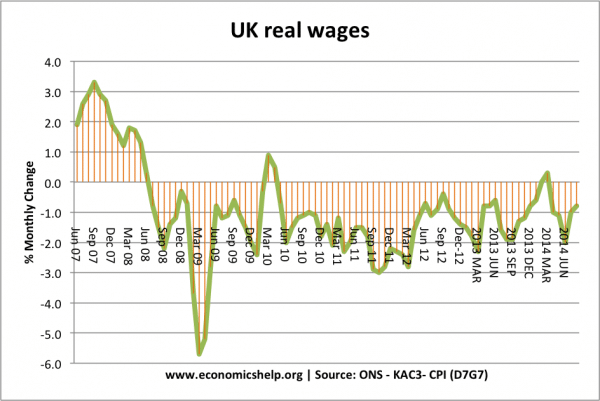
Lack of economic stimulus. has contributed heavily to wage repression - as this graph shows, wages have increased at below the rate of inflation in every quarter since the coalition came to power bar one. It is interesting to note that the brief pre-election recovery in real wages came only after two years of fiscal stimulus packages by the Brown ministry. His chosen method of stimulus, relying heavily on quantitative easing and the bank bailouts, was far from optimal - it injected money into the finance industry but neglected other sectors - but it did actually start to show some results by early 2010. Naturally, the Tories took swift steps to shut that nonsense down immediately upon assuming power.
With average wages so far below inflation, it is easy to see why most people just aren't feeling the so-called 'recovery'. Abstract GDP growth figures, however promising on paper, just don't mean anything to ordinary people if the money in their pocket isn't there. But if the economy is growing, and yet it isn't making its way down to us, then where the hell is it?!
That's an easy one too. It's in the pockets of CEOs and bankers, of company shareholders and major landowners. The combined wealth of the richest 1,000 UK households jumped 15% in 2013 and now stands at almost £520 billion, with the result that the UK now has more billionaires per head than any other country. The baseline for entry into this super-elite group is now £85 million - £5 million more than before the recession. So, while the UK as a whole has only just surpassed 2008 levels and the average person is still some considerable distance from that, the richest members of our society are actually much better off than they were six years ago.
Some people, then, have done very well out of the global economic crash and the suffering of millions. The rest of us, meanwhile, are a little more strapped for cash - and it doesn't look like it's getting any better anytime soon. With the Tories plotting a law which will make eliminating the budget deficit by 2018 a legal requirement, more cuts are on their way, which will lead to further wage depression and thus falling demand in the economy. The current trend towards underemployment, with more and more people disappearing from unemployment stats into false self-employment or abusive zero-hours contracts, will continue and the queues outside food banks and job centres will only grow.
Of course, that will push up the welfare bill, sending Daily Mail readers frothing at the mouth and baying for blood. Then the government will be 'forced' to slash social security further, driving more and more people - particularly young people - onto the scrapheap. Welcome to the age of austerity politics. It hasn't worked so far, but the elitist, neoliberal mainstream parties aren't about to let a silly little thing like that stop them! They have the lower orders to crush.
Thursday, 27 November 2014
Israel's Apartheid Continues
Benjamin Netanyahu is at it again. He is not content, apparently, with the continuing blockade of the Gaza Strip, with the government-sponsored construction of illegal settlements on Palestinian soil, with the occupation of the State of Palestine itself in violation of any semblance of international law, and with the periodic brutality of the Israeli armed forces in their fruitless assaults on Palestine and her people. No, none of this is enough for this genocidal warmonger - now he is to make the Palestinian people second-class citizens in their own lands.
A bill currently going through the Israeli parliament will make Jewishness a condition of the 'national rights' of Israel. For the 25% of the population who are not, including the Palestinians who live under Israeli occupation, lesser 'civil rights' will still be available - according to Netanyahu - but they will be officially, legally second-class citizens. The bill also bans the flying of the Palestinian flag and a number of other measures dressed up as counter-terrorism but in reality targeting the oppressed Palestinians.
This bill is so blatantly ridiculous, even Netanyahu's fellow Likud party member and President of Israel Reuven Rivlin has come out against it, calling it 'unnecessary' and 'harmful' and pointing out that it will play into the hands of Israel's critics. Damn right it will: this is further evidence of the Likud government's ultra-Zionist, far-right agenda to crush the Palestinian people out of existence - or at least, out of Israel.
The ridiculous thing is, the quickest way to remove the Palestinians from Israel, halt the majority of the inter-community violence in the region and make the bill truly unnecessary would be to recognise Palestine's sovereignty and accept the two-state solution - but that is something Netanyahu will not do. Meanwhile, Palestinians - who have always been treated as second-class citizens in Israel - will not take this new legal confirmation of their status lightly. One commentator, Abu Azzan Saud, went to far as to call this 'the beginning of the third intifada'.
So, more deaths to come, then, on the back of a law allegedly designed to reduce the killing. Welcome to Netanyahu's apartheid state.
Friday, 21 November 2014
Deja Vu: UKIP By-Election Victory. Again
Yesterday’s by-election was more or less a foregone
conclusion, with the Tories’ original promise to ‘throw the kitchen sink’ at
Rochester & Strood having been ashes in the mouth of the Prime Minister for
at least a week. So, Mark Reckless – UKIP’s candidate – retakes the seat he
held as a Conservative MP from 2010, and no-one in the country with so much the
suggestion of a finger on the fluttering political pulse of the nation should
be at all surprised.
That doesn’t mean
the win is insignificant, however – not by any means. There have been noises
for a few days now about a UKIP win triggering at least two more defections
from the Tories. There are about as many candidates for this as there are Tory
backbenchers, but two frontrunners are the arch-Eurosceptic Peter Bone – who has
called for UKIP and the Tories to work together in the past – and John Baron,
who when questioned about whether he would defect replied with the deliciously clichéd
‘never say never’.
With the General
Election approaching fast, it is more and more unlikely that the new tradition
of forcing a by-election if you decide to jump ship to Farage’s mob would hold.
Therefore, any future defections could well be automatic, potentially swelling
the ranks of UKIP substantially in the run-up to May 2015. However, whilst Farage
will be keen of course to pinch as many Tories as he can get his made-in-the-UK
purple mittens on, what he is really after now is a Labour defector. This would
fit in with his growing narrative about UKIP being a party of neither the left
nor the right – and, considering polling shows their appeal among former
Conservative voters is approaching its critical mass, it is looking increasingly
necessary if UKIP want to keep up their admittedly impressive momentum.
And what about
Rochester & Strood itself? Well, with a much-reduced majority of 7.3% on a
low turnout of just 50%, Reckless is far from secure. Lord Ashcroft’s polling
shows that the Tories are likely to reclaim the seat in 2015, when – as Grant
Schapps put it this morning – ‘the future of the country will be on the ballot
paper’. Lib Dem, Labour and even Green supporters might be willing to lend
their votes to the Tories to keep out a UKIP MP for a full parliament where
they were not willing to do so for the sake of five months. We shall see.
Speaking of the
other parties, it didn’t go too well for them either. The swing against Labour
was -12%, nearly as much as against the Tories, while the Lib Dems got just 1% and
lost their deposit once again. The Green Party, meanwhile, continued their
recent trend of thrashing the Lib Dems into fourth place with 4% at the expense
of some of the Labour vote. Sixth place, for those who are interested, went to
a dominatrix who was last year voted Britain’s favourite sex worker. She got
just 300 votes less than the Lib Dem candidate.
To summarise: UKIP
continue their march, while the Tory and Labour high commands will be quaking
in their respective boots at the prospect of further defections. The Greens are
still doing quite well and the Lib Dems look like the next general election may
well see them wiped off the face of the Earth. 2015 is going to be an
interesting one, methinks.
Sunday, 9 November 2014
Remembrance
For King,
flag and country they took to the field
For Kaiser
and Sultan they snatched up their guns
For Tsar and
for Emperor they readied their cannon
For freedom
and glory they pounded the drums
For France
and for Belgium the Entente declared
No German or
Austrian the Channel would sight
The Tsar of
the Russias swore his Slavic brothers
Would be
beholden no longer to the Habsburg Duke’s might
The Germans
for their part defended the honour
Of their
Austrian cousins whose son had been slain
Austria-Hungary
readied its armies
For the
death of an Archduke, now bloodshed would reign
Uncle Sam
and his legions came late to the fray
The Italian
Prime Minister switched sides at the last
The Ottoman
Empire was wooed by the Germans
The Balkans
rose up against their Austrian past
The fighting
was bitter; the casualties many
Sixteen
million lives were snuffed out in the war
Four Empires
were shattered; the others were crippled
The balance
of power was balanced no more
What did
they fight for, those bravest of soldiers?
For what did
they struggle through barbed wire and shells?
What reason
could send seventy million men
To risk
their lives and their futures for four years of Hell?
Some fought
for freedom; against oppression and empire
Some fought
for justice and a world free of fear
Some fought
for their families, to safeguard their future
Some fought
for the countries that they held so dear
Some fought
out of shame if they didn’t contribute
Some fought
because their governments told them they must
Perhaps the
bravest of all, did not fight at all
But stood up
for their principles in the face of disgust
They each
were lied to, those valiant warriors
Each man and
each woman who stood up and risked death
There was no
free world at the end of the struggle
Victor and
vanquished; neither tasted success
No worker in
London or Paris or Rome
Gained
freedom from toil or protection from harm
No peasant
in Hungary or France or in Poland
Gained the
land or the bread for which he had borne arms
The Revolution
in Russia – so much hope at the outset
Quickly
dissolved into killing and lies
And no
Treaty could bring back the 3 million innocents
Lost in the
genocide the Turkish denied
And lest we
forget, the war settled nothing
Versailles
was a stitch-up, the peace was a fake
Twenty years
later the fighting restarted
And another
85 million went to their graves
The Middle
East was carved up by imperial powers
Now we see
the results of this spelled out in blood
100 years
later we cannot escape it
The sins of
the fathers are the deaths of the sons
So then, my
friends, my brothers and sisters
My comrades
in peace, though pray never in war
Let us
remember, this dreary November
The dead
then and since – but do not be fooled
War is not
and is never a glorious thing
And freedom
is rarely the prize at the peace
So when
political leaders extoll conflict’s virtues
Just keep in
your minds who fights for whose needs
And though
sometimes a war can be grim but be just
And to sit
and do nothing may not be the remedy
Always be
wary when the battle-horns sound
And remember
– who is the real enemy?
Saturday, 8 November 2014
Who Rules The World?
Forbes has released its annual 'The World's Most Powerful People' list - so who's on it?
For the last five years, American business magazine Forbes has published a list of the world's most powerful people alongside its traditional rich list. The new edition is out today, so without further ado, let's take a look at the top ten.
No.10: David Cameron
No. 9: Sergey Brin & Larry Page
The Google co-founders are in joint-ninth place; this is a considerable jump from seventeenth last year. They own 14% of the company, and control 56% of its stockholder voting power - this gives the Stanford University classmates, then, effective control of the company. With an equity of over $87 billion as of last year, and still rising, it is the third biggest company by market value in the world. Brin and Page's power comes not just from Google's value, though, but also from its domination (65%) of global online search traffic and the influence this gives them in controlling the flow of information. With Google seemingly unstoppable in its rise, they could well have ascended still higher by next year.
No. 8: Mario Draghi
Draghi is probably one of the least well-known names on this list; as President of the European Central Bank, though, he is one of the most powerful men in Europe, essentially at the heart of EU monetary policy since 2011. Though very much a behind-the-scenes individual, Draghi's power should not be underestimated - particularly in the current economic climate, where the recommendations of this institution do so much to determine the destiny of the EU as a whole. As the man responsible for propping up much of the European financial sector, the Roman banker, despite his unobtrusive public role, is one of the big beasts of European politics.
No. 7: Bill Gates

Bill Gates has slipped a place since last year - though he retains pole position in the parallel rich list. The Microsoft founder is no longer Chairman of the company, nor - since May - the largest shareholder; he does, however, still own a significant interest in the computer giant, and as co-trustee of the Bill & Melinda Gates Foundation is one of the world's major philanthropists. His personal fortune and extensive network of contacts are the reason for his position on the list; his huge personal following is also a major asset - his participation in the ALS Ice Bucket Challenge was one of the major steps in its mass popularisation, for example.
No. 6: Janet Yellen
Yellen is the new Chairman of the Federal Reserve: the huge, complex, semi-independent system of financial institutions which acts as the central bank of the USA. The Reserve is partly private in ownership, and exists to serve the interests of private banking firms as much as the state; it is, nevertheless, responsible for monetary policy and some aspects of economic policy within the USA. Yellen is the first woman to helm the gargantuan financial system; she has been described as a 'dove', meaning her focus is on keeping unemployment low rather than inflation - though both are important parts of her mandate.
No. 5: Angela Merkel

A consistent holder of the number five spot, the German Bundeskanzler is the pre-eminent politician within the European Union, with Germany the largest economic power within the union. As with any elected politician, her position on the list is of course vulnerable to electoral fortunes; however, the fact she has been in power for nine years and remains popular suggests Merkel will not be disappearing from the upper echelons of power any time soon. Her current challenge is, along with Mario Draghi, to prevent the Eurozone from slipping back into recession - that and dealing with the recalcitrant Cameron and the UK's flirtations with an EU exit.
No. 4: Pope Francis I
The Catholic leader has maintained his fourth place position from last year; as the only religious leader in the top ten, Francis is something of an oddity among the ranks of politicians, bankers and entrepreneurs. The 77-year-old Argentinian is the first non-European Pope in over 1200 years; more, he has proved himself a zealous reformer, making an effort to strip some of the ostentatiousness and politicking from the Vatican. He has made himself no few enemies in the process, but - the days of Papal regicide being surely behind us - there is little they can do. Francis remains dedicated to catholic doctrine, however, and his influence over the 1.2 billion Catholics worldwide cannot be underestimated.
No. 7: Bill Gates
Bill Gates has slipped a place since last year - though he retains pole position in the parallel rich list. The Microsoft founder is no longer Chairman of the company, nor - since May - the largest shareholder; he does, however, still own a significant interest in the computer giant, and as co-trustee of the Bill & Melinda Gates Foundation is one of the world's major philanthropists. His personal fortune and extensive network of contacts are the reason for his position on the list; his huge personal following is also a major asset - his participation in the ALS Ice Bucket Challenge was one of the major steps in its mass popularisation, for example.
No. 6: Janet Yellen
No. 5: Angela Merkel
A consistent holder of the number five spot, the German Bundeskanzler is the pre-eminent politician within the European Union, with Germany the largest economic power within the union. As with any elected politician, her position on the list is of course vulnerable to electoral fortunes; however, the fact she has been in power for nine years and remains popular suggests Merkel will not be disappearing from the upper echelons of power any time soon. Her current challenge is, along with Mario Draghi, to prevent the Eurozone from slipping back into recession - that and dealing with the recalcitrant Cameron and the UK's flirtations with an EU exit.
No. 4: Pope Francis I
No. 3: Xi Jinping
Xi is China's 'Paramount Leader', holding the three offices of General Secretary of the Communist Party, president of the People's Republic and Chairman of the Central Military Commission. China is now the world's largest economy and has the largest standing army; it threatens the USA, therefore, as the dominant global power. Chinese decision-making is now more consensual than in previous years, but Xi nevertheless wields huge power within the authoritarian People's Republic. He has undertaken reforms to reduce corruption and increase the importance of markets within the Chinese economy.
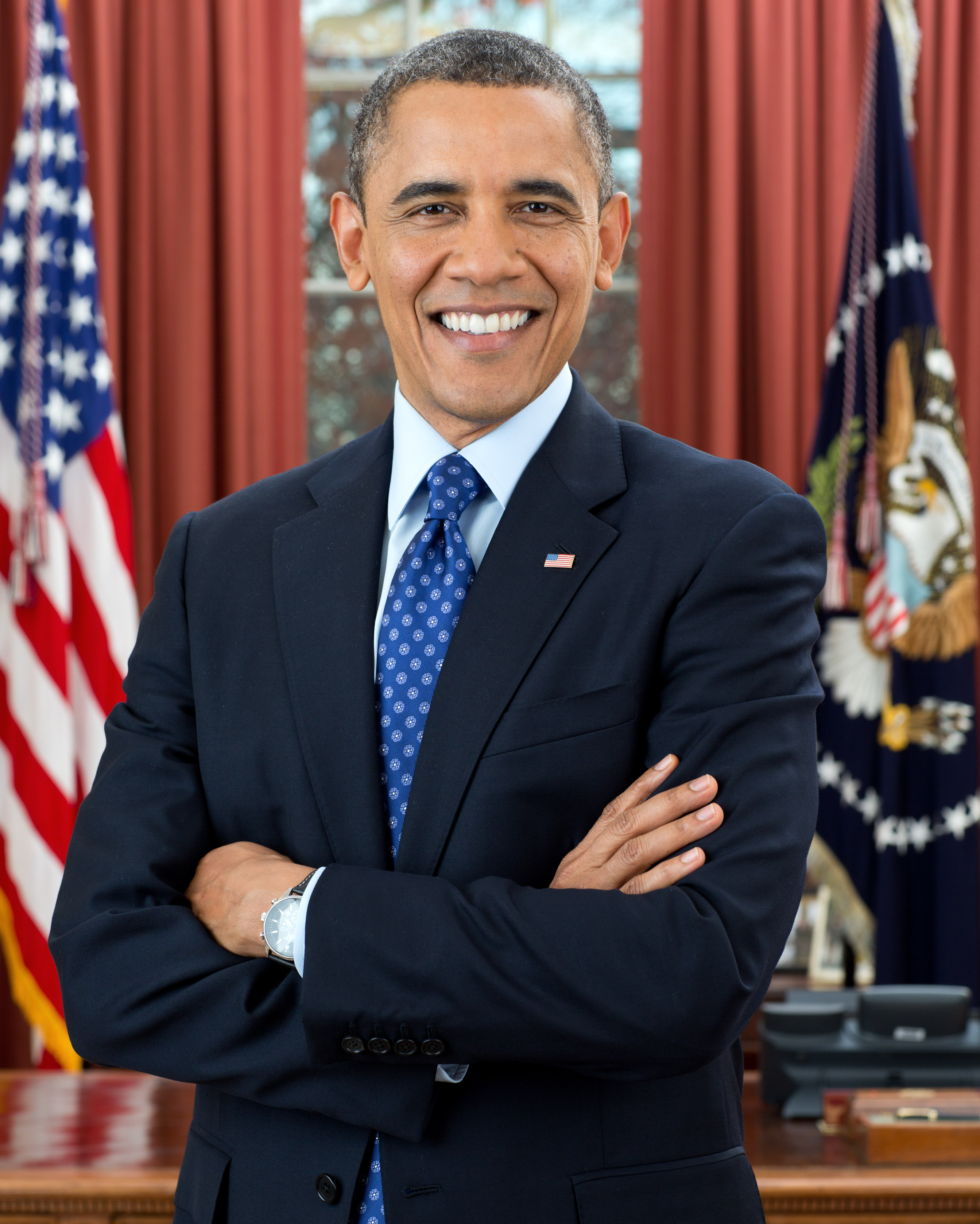
No. 2: Barack Obama
No. 1: Vladimir Putin
Friday, 31 October 2014
Education, Education, Education: Aspiration Tax
Tuition fees do not help fund higher education - they are a punitive tax on aspiration
The Genesis of Tuition Fees
It is a fundamental principle of socialism that education should be provided equally and freely to all. It is a fundamental principle of neoliberalism that aspiration should not be taxed. And yet the Labour governments of 1997-2010 broke both of these principles - the socialist one they claim as their heritage, and the neoliberal one which they adopted under Tony Blair in a bid for power.
How did they do this, you ask? Simple - Labour first introduced, and then trebled, tuition fees for University courses. Before 1998, you did not pay for your education - it would be to go against both the post-war social democratic consensus and the post-Thatcherite neoliberal consensus for such a thing to happen. John Major first floated the idea of alternative sources of higher education funding, but it was the Blair/Brown New Labour project which finally implemented the policy.
The Coalition government, of course, are now most linked in the minds of the British people with tuition fees - as well they might be. The spectacular way in which the Liberal Democrat promise to scrap tuition fees entirely was broken is the stuff of political legend; what is even more worrying, though, is that the Conservative party wanted to remove the cap on fees altogether, leaving the UK higher education system completely open to market forces in a way even the USA cannot match (not all American colleges are for-profit institutions). As it stands, students are now saddled with a £9,000-a-year debt.
A Tax on Aspiration

It is pretty clear to see how tuition fees violate the principle of free and equal access to education - in short, it makes education no longer free and restricts access to it on the basis of wealth (or willingness to accrue large amounts of long-term debt). It is somewhat less straightforward to see how such a policy constitutes an aspiration tax, but all it requires is a moment's consideration.
Education can be seen as a way of improving one's chances in life: it is no secret that even fairly mundane jobs these days often require a degree, and access to many professions - law, teaching, the civil service etc. - is almost impossible without one. Possession of a higher education degree, then, can improve your quality of life quite considerably; it is, in short, a key to what is for many a lifestyle they aspire to. Simply put, someone with a degree earns on average 85% more than someone with only GCSEs, while someone with only A Levels earns just 15% more. A degree, in the brutal monetary terms in which we are forced to see it, equals earning potential.
Slapping a £27,000 price tag (more if it's a longer course, plus the cost of paying back your student loan, plus interest, plus other costs - the true cost of getting a degree is estimated around £100,000) on this potential makes it harder for people to access. Though loans are of course available, taking on that kind of debt is a terrifying prospect for many young people. It puts them off furthering their education, and application levels - despite having risen this year - are still below the level they were before the tuition fee hike. Consider that the economy has 'recovered' during that time, and population has grown by three-quarters of a million, and this is an alarming thing.
So, tuition fees are a method of imposing what is in essence a tax on the aspiration of young people to improve their lives. They also discourage degrees which do not translate directly into a high-earning job at the end of it, such as finance or law - in order to pay off this huge debt, students are leaving behind courses in the arts and humanities in favour of the physical and social sciences. The true purpose of learning - the acquisition of knowledge - has been supplanted by bald monetary calculations.
It should also be noted that tuition fees are not equal across the UK - in England, they are capped at £9,000; in Scotland, they do not exist; in Wales, grants exist to cover the first £5,315; in Northern Ireland, they are £3,685. Even more ridiculous, EU students in Scotland and Wales receive the same tuition fees as Scottish/Welsh nationals; whilst English and Northern Irish students have to pay. This patchwork system of fees means that the English in particular are grossly discriminated against.
What's Their Motivation?
So, why would the establishment parties want to impose such an aspiration tax? It isn't for the economic benefit to the country - it is estimated that the average student won't actually pay back 43% of their loan - they'll just be saddled with a huge debt for 30 years - and the increase to £9,000 will actually end up losing the government money. Furthermore, Higher Education in total costs £27.9 billion a year; the UK spends £45.6 billion a year on defence. What would YOU consider more important?
No, the real reason behind the aspiration tax is an attempt to prevent students from furthering themselves. It stands to reason: knowledge is power, and the ruling elite are quite fond of having all the power, thank you very much. A degree also, as we have discussed, translates directly into economic benefit - and as we know, thanks to the neoliberal deregulation of the financial sector, there's only so much money to go around. It is in the interests of those who have it to prevent others from acquiring it - hence the aspiration tax.
Overall, tuition fees are a policy designed only to hurt students. The recent rise is going to end up actually costing the government £5 billion a year anyway; why not just scrap it? The Treasury saves money, students aren't faced with mountains of debt and education might actually come to be seen as a priority again.
Friday, 24 October 2014
The REAL Problem With Europe
Most criticism of the EU is right-wing vitriol - but there are real problems with the Brussels machine
Right-Wing Pet Hates
Criticism of the EU from the right-wing political establishment focuses around what is really two points - freedom of movement and human rights laws. Freedom of movement is a fundamental principle behind the European Single Market - something which David Cameron is otherwise very much in favour of - and freedom of movement of labour cannot be separated from the other three freedoms - goods, services and capital - which are essential for allowing an integrated European economy.
On the subject of human rights, any attempt to withdraw from the European Convention would be inconceivable. Not only is the Convention itself another fundamentally British invention - Winston Churchill's this time; not looking good for the Tories, is it? - but it would be virtually impossible to remove European human rights protections without replacing them with essentially identical British protections. The alternative is to cast in our lot with countries like Belarus and Saudi Arabia - something which no British government could do without inspiring general outrage.
What About the Rest?
Beyond these two non-problems, the right-wing political establishment and media seem to be pretty happy with the EU as is. Yes, there are periodical requests for more money - such as that for another €2.1 billion which hit the newspapers on the 24th of October - which elicit indignation from the supporters of so-called Tory austerity, but these are fleeting objections. More or less, mainstream politicians couldn't care less about the rest of the EU's problems.
But there are some real issues with the way Europe works. For starters, consider that the EU is a fundamentally undemocratic organisation. The European Parliament is the only EU body which is actually elected and, despite receiving new powers under the 2008 Treaty of Lisbon, is still very much the weakest EU institution. The Conservative Party, it should be pointed out,
actually opposed even these limited powers to Parliament - they would rather appointed institutions like the Commission and Coreper (the EU civil service). Some areas of policy, such as taxation and justice policy, still aren't subject to any kind of democratic scrutiny at all. Instead of wasting time attacking the basic principles of the EU, the changing of which will be neither possible nor beneficial, why don't the mainstream parties focus on this absurd lack of democracy?
TTIP has the support of the Conservative, Labour and Liberal Democrat Parties and even UKIP supported it until recently - abandoning the idea as soon as it became clear that there was public opposition to it, another fine example of principled UKIP policy-making. Only the Green Party opposed this dangerous treaty from the outset, along with a grassroots campaign mustered by 38 degrees (sign their petition against TTIP here). This is a clear sign if one was needed that the mainstream political parties don't really care about the sovereignty of the United Kingdom, just clinging on to their own positions of power.
Conclusions
The European Union was a fantastic idea which has gone badly wrong. Anti-democratic organisational features and economic incompetence have led what should have been a wonderful experiment in international peace and co-operation into a deepening crisis, while TTIP threatens the very economic sovereignty of its members. UKIP's solution to the problems of Europe is to jump ship; my preference would always be to push for reform first, but what is clear is that the establishment parties will not tackle the real issues with Europe, so obsessed are they with chasing UKIP's right-wing narrative over immigration and human rights laws. As usual, it's up to us - the people - to force the idiots and self-serving careerists who rule us to take the right course. Don't hold your breath.
Tuesday, 21 October 2014
Ramblings of a Godless Heathen
Atheism and religious extremism are both on the rise - it's time we talked about it
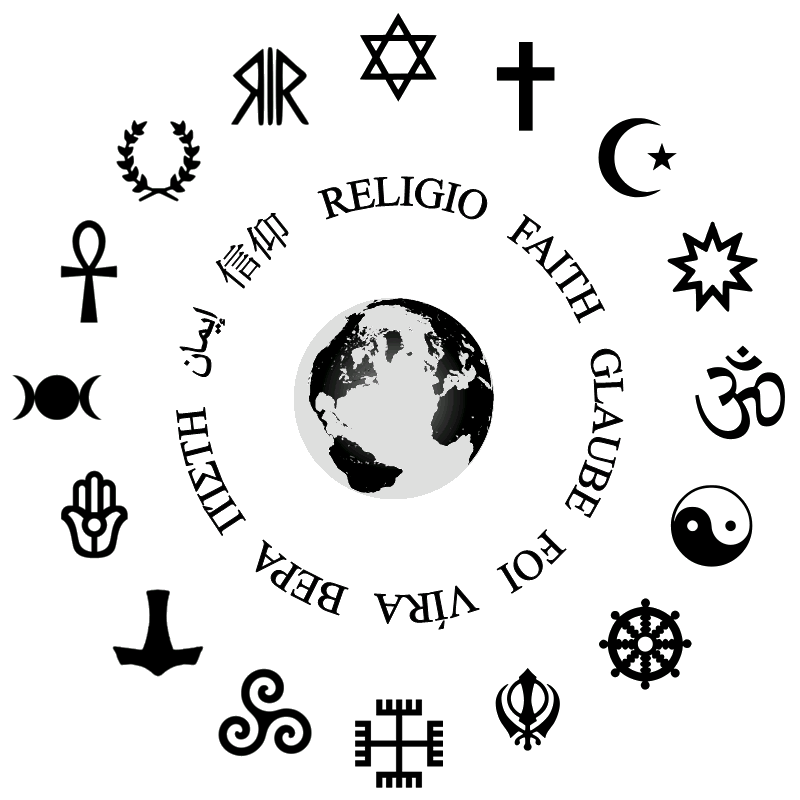
In a Britain where both extremes of attitude to faith - total disbelief and total belief - are becoming more common, it is important to talk about this, even if it does provoke discomfort to do so. The champions of what is often (mis)termed 'militant atheism' - people like Richard Dawkins, Sam Harris and the late Christopher Hitchens - have reached the point now where they are alienating as many people as they convert. It is perhaps time then for a less charged discussion. Here goes...
What's in a Name?
To start with, let's define some terms. We'll kick off with the aforementioned 'militant atheist' - a nonsense term if there ever was one. A militant is someone who takes up arms in the name of a cause; very few people have ever taken up arms in the name of not believing in a god - why would you? (And no, Stalin doesn't count. Don't go there.)
Atheist means simply someone who does not believe in any gods. To be clear, it does not mean they believe there definitely aren't any - just that, on balance, they think there is insufficient reason to believe there are. What people mean when they say 'militant atheist' is usually antitheist - i.e. someone who is opposed to religious belief. It is entirely possible to be an atheist without being an antitheist.
Theist, as you probably guessed, is someone who believes in at least one god - they may believe in many more. The word for this is polytheist, whereas someone who believes in a single deity is a monotheist. Some faiths have a concept of multiple aspects of a single deity having semi-independent existence of their own - e.g. Hinduism and most denominations of Christianity - which is known as pluriform monotheism.
Agnostic is a more ambiguous term - technically it describes anyone not 100% certain that god(s) either exist or that they don't, which includes most atheists and most theists. More usually, however, it is used to describe someone who is halfway between the two - i.e. someone who considers the probability of the existence of god(s) to be as likely as it is not. These people are pretty rare, in my experience.
Who's Who?
The three most important faiths within the UK, according to the 2011 census, are Christianity (59.5%), Islam (4.4%) and Hinduism (1.9%), with 25.7% of the population having no religion. Within Christianity, the most important denominations are Anglicanism (62%), Roman Catholicism (13.5%), Presbyterianism (6%) and Methodism (3.4%).
The British Social Attitudes Survey suggests a somewhat different picture, however. The 2013 edition put Christianity on 41.6%, Islam on 4.6% and Hinduism on 1.5%, with a majority (50.6%) stating they had no religion. There are numerous possible causes for this discrepancy - more up-to-date data, a smaller sample size, the elimination of the problem of parents putting their own faith as their children's on census forms etc. (it should be noted, however, that the margin of error in the Survey was only 1.72%).
What I reckon...
I am, and have been more or less since the age of fifteen, an atheist. This does not mean, as noted above, I am certain no gods exist - what it means is that I have never seen any particularly compelling evidence to prove that any do. The claim that one or more supernatural entities exist, hidden from our sight, and control many aspects of the world and human life seems to me to be quite an incredible one. It requires, therefore, some fairly incredible evidence - evidence which is not apparent to me.
Though I was raised a Christian (of somewhat hazy denomination - mostly Anglican with a bit of Methodist thrown in for good measure) I was never a particularly devout one, and - following a brief period of heightened religious awareness in my early teens - more or less slowly lost my faith over the course of a couple of years. It simply seemed to me that the only reason I believed in God was that I had been told he existed, without any independent corroboration of the fact. Whilst I am open to any evidence any theist might care to proffer, so far I have seen nothing even remotely convincing.
Following the loss of my faith I became fairly antitheistic for a brief period. I would now consider myself somewhat less so, but I do believe the existence of religion causes a few problems. My opposition is not really to the kind of personal spiritual belief which characterises many ancient polytheistic religions and the so-called New Age beliefs of the twentieth century. Whilst some of these ideas do strain my credulity - frequently well past breaking point - they do little real harm. No, my main concern is organised religion.
The Dangers of Organised Religion
I would define organised religion as one which has a hierarchy within it - where certain people are placed above others in the religious pecking order. They also tend to have what you could consider the 'traditional' trappings of religion - holy books, places of worship, formal prayers and rituals. The Roman Catholic Church and the Church of England are the two clearest examples of this kind of set-up, but it also includes most other Christian denominations, as well as most Judaic, Islamic, Sikh, Buddhist denominations, and many others besides.
The issue with these kinds of hierarchical religions is they impress upon their members the idea of obedience - blind obedience, without question. The problem is especially marked when children are introduced to such organisations - the human impulse to listen to and take heed of the advice of our elders, essential for survival in early humans, allows indoctrination and exploitation of young people. Vulnerable adults, such as those with severe learning difficulties or mental illnesses, are also easy targets for these hierarchies. The upper echelons of such religious groups - Archbishops, Cardinals, Ayatollahs and the like - are able to exert massive influence over vast swathes of people.
This is a form of social control. Throughout history, the unelected leaders of religious organisations have wielded enormous power over the populations they ostensibly serve. They have also frequently collaborated with governments to the detriment of the people - the complicity of the Catholic Church in the atrocities of the fascist regimes in Italy and Spain in the twentieth century (though less so in Germany) being perhaps the most dramatic example of this. Ultimately, the fact that anyone wields such power without being democratically elected is concerning.
Blind Faith
This leads me to another (linked) problem with the more dogmatic religions - the accepting of doctrine on blind faith alone. This occurs in most religions, to varying degrees, but it is particularly pronounced in Wahhabi Islam, Orthodox Judaism and Christian denominations such as Mormonism (and in other Christian Churches before the secularisation of the late 20th Century). There is a fine line between these extremely dogmatic faiths and dangerous cults and extremist groups. It is no coincidence that IS, for example, are followers of a particularly extreme form of Wahhabi.
Unquestioning obedience to authority and acceptance of doctrine without supporting fact is how demagogues build up support for their ideologies without challenge, and it is a mindset which is fostered by the dogmatism of many religious groups. Sceptiscism is the sign of a healthy, enquiring mind - nothing should be taken on faith alone.
Conclusions
I hope I have outlined clearly my own beliefs and just two of the principal issues I see with organised religion in the 21st century. This is not to say there are not others, and it is certainly not to say that religion does not have its positives. Talking about faith, why one is or is not religious, and what the issues are which one sees in people of differing beliefs to oneself is still something of a taboo in British society today - but it shouldn't be. Only by having a frank, honest and open dialogue can we resolve these issues and challenge the extremist positions taken by some individuals. Faith - or lack thereof - is a protected characteristic under UK anti-discrimination laws, but that shouldn't mean we can't talk about it and criticise it if need be.
if we don't, after all, we've seen what the consequences can be.
Wednesday, 15 October 2014
Politicians: They Won't Change Unless We Make Them
For decades, and particularly since the expenses scandal of 2009, politicians have grown steadily more despised - but why should they change?
An ICM poll, published in the Guardian on October the 13th, gave us some interesting information on the state of politics in October 2014. The party polling itself was fairly standard fare - the only real point to note is the expected 5-point increase in UKIP's share in the wake of Douglas Carswell's election in Clacton - but more interesting is the data on the leaders' personal ratings, shown below:
Why, then, do our political masters get away with being seen as universally useless? Sadly, the answer is because we let them. This most recent poll makes one thing clear - despite seeing their leaders (two potential Prime Ministers and a potential Deputy Prime Minister) as incompetent, 80% of the population who state they are likely to vote in May 2015 are planning to vote for either Labour, UKIP or the Conservatives. Add in the Lib Dems - whose neoliberal policies make them virtually identical to the other three, despite their current disfavour - and that's 91%.
An ICM poll, published in the Guardian on October the 13th, gave us some interesting information on the state of politics in October 2014. The party polling itself was fairly standard fare - the only real point to note is the expected 5-point increase in UKIP's share in the wake of Douglas Carswell's election in Clacton - but more interesting is the data on the leaders' personal ratings, shown below:
One point to raise straightaway is the absence of two individuals: Natalie Bennett, leader of the Green Party (expected, due to the outrageous anti-Green media bias) and Nick Clegg. Clegg's absence is particularly telling - it demonstrates the total lack of regard given to the now-decimated Liberal Democrats. But more important still is the data itself.
Notice the numbers on the graphs. It will not escape your notice that they are all significantly below zero. Now, it is clear that certain leaders have strengths in certain areas: Farage leads significantly on perceived ability to understand the public and on perceived honesty, while Miliband is clearly ahead on looking after the interests of the many over the few.
Farage's party, then, will use these data to improve their anti-establishment credentials; Labour will (cautiously, so as to avoid cries of 'evil socialism) capitalise on the sense that they, not UKIP, are the true party of the working classes. Cameron will do his best not to mention them at all. But none of these approaches get to the real heart of the matter - and why would they? It is in the interests of all the neoliberal parties not to raise this question. So It's going to have to be me.
The question is this: Why are our politicians so awful that we are having to differentiate between different degrees of negative publicity just to draw out some meaningful comparison?
At the end of the day, it shouldn't matter that Ed Miliband is only 10 points below par at looking after the working classes while Farage and Cameron are 20 points below, because the key thing is this: They are ALL seen as terrible. Even 'anti-establishment', flavour-of-the-month UKIP has a leader seen as generally incapable across these three fairly broad categories. The fact that one leader might be slightly less bad than the other two should be irrelevant. The only reason it isn't is because the leaders are more or less identical, so the minutiae become suddenly vital differentiators.
Even worse than this overwhelming lemming-style rush towards parties which these data prove we have no enthusiasm for is the number of people planning not to vote at all. The same poll shows that 23% of people rate themselves as 50% certain or less to vote, with 10% saying already that they definitely won't. Results from past elections show that, on average, around a third of voters do not vote on polling day. I've spoken at length about voter apathy before, so i won't wax lyrical about it here, but this also feeds into the overall issue.
And that issue is this: Politicians won't change, they won't become any better than their current abysmal low, until we make them. And, much as Russell brand would have you believe otherwise, refusing to participate - tempting as it is - will not do that. Neither will voting for parties who espouse the same hypocritical, neoliberal-authoritarian post-Thatcherite political consensus as the Tories - and that includes UKIP as well as Labour and the Lib Dems.
The only way to force a change is to get involved. Campaign on issues which animate you, which make your blood boil; speak out when things occur in the world which are unfair; vote when polling day comes around, and for the Greens or the nationalists or any other party which challenges the status quo. But don't limit yourself just to voting - Brand is right about that: the once-every-five-years electoral ballot is the establishment's way of keeping us quiet in between. Fight for the things you deserve and for what you believe in, and maybe - just maybe - we might get some politicians who aren't universally reviled.
One can but hope.
Subscribe to:
Posts (Atom)