Showing posts with label David Cameron. Show all posts

Friday, 8 May 2015

Election 2015: A Little Post-Match Analysis

  Well, I did not see that coming.

  The fact that nobody else did either is little consolation: the Conservative Party has won a majority of 6, and David Cameron will return to No.10 Downing Street as Prime Minister. Whilst most people anticipated that the Tories might well win largest party, no-one thought that they would manage to win outright. The pre-election polling has never been so drastically wrong, even in the 1992 debacle.

  So, is it time for everyone to the left of the Tory neoliberals to curl up in a corner and cry? Well, no. The temptation may be great, but I feel it is one that we should resist; for now, at least. All is not quite lost just yet. Here is a quick rundown of the major events of election night, and exactly what they mean for the future of this country.

The Conservatives won a majority of twelve. Clearly, a Tory government is not the result I or many others on the left wanted. The failures of the Conservatives over the last five years are stark: Real wages have entered their longest period of sustained decline in at least 50 years, the UK's GDP per capita is still lower than its pre-recession peak, the deep cuts to welfare have resulted in dozens of deaths and left hundreds of thousands of people destitute, the top-down reorganisation of the NHS has wasted millions and allowed creeping privatisation to continue... I could go on, but I'd only bore you. Suffice it to say, the Tories have had a terrible effect on this country.

However, all is not entirely lost. The Conservatives may have won a majority, but it is a small one; a much reduced majority, in fact, from that the Coalition has enjoyed since 2010. This means that Cameron will find it increasingly difficult to govern as backbench rebels - of which there will be many, you may be sure - hold his party to ransom. The corollary of that, of course, is that he may have to step up the anti-Europe and socially conservative rhetoric to appease the Tory old guard. So, the effects of this small majority may be good or bad, but the new government is certainly going to be far from stable.


The leaders of the three main opposition parties have resigned. Nick Clegg, Ed Miliband and Nigel Farage have all resigned as leaders of their respective parties. In Miliband's case, this is reasonable; under his leadership, the party lost seats and suffered electoral wipeout in Scotland, due at least in part to his personal inability to connect with the electorate. He represents the metropolitan champagne socialist branch of Labour, and this was obviously not something the people of the UK could believe in. 

Clegg's departure is also fair enough. The Liberal Democrats have been reduced to just 8 seats in the Commons, putting them in joint-fourth place with the DUP. From their impressive performances at the 2005 and 2010 elections, this is a long way to fall, and Nick Clegg's decision to take the party into coalition is certainly responsible.

The resignation of Nigel Farage (having failed to win South Thanet) is, quite frankly, the best news I've had all day, but it is also worrying. Farage has been the figurehead of UKIP for so long that his departure (however temporary I suspect it may be) could cause UKIP to collapse (a very good thing), or it could allow the far-right elements within the party to take over. Make no mistake, Nigel is by no means the worst of the bunch, and a UKIP pulled even further to the right is a scary prospect.
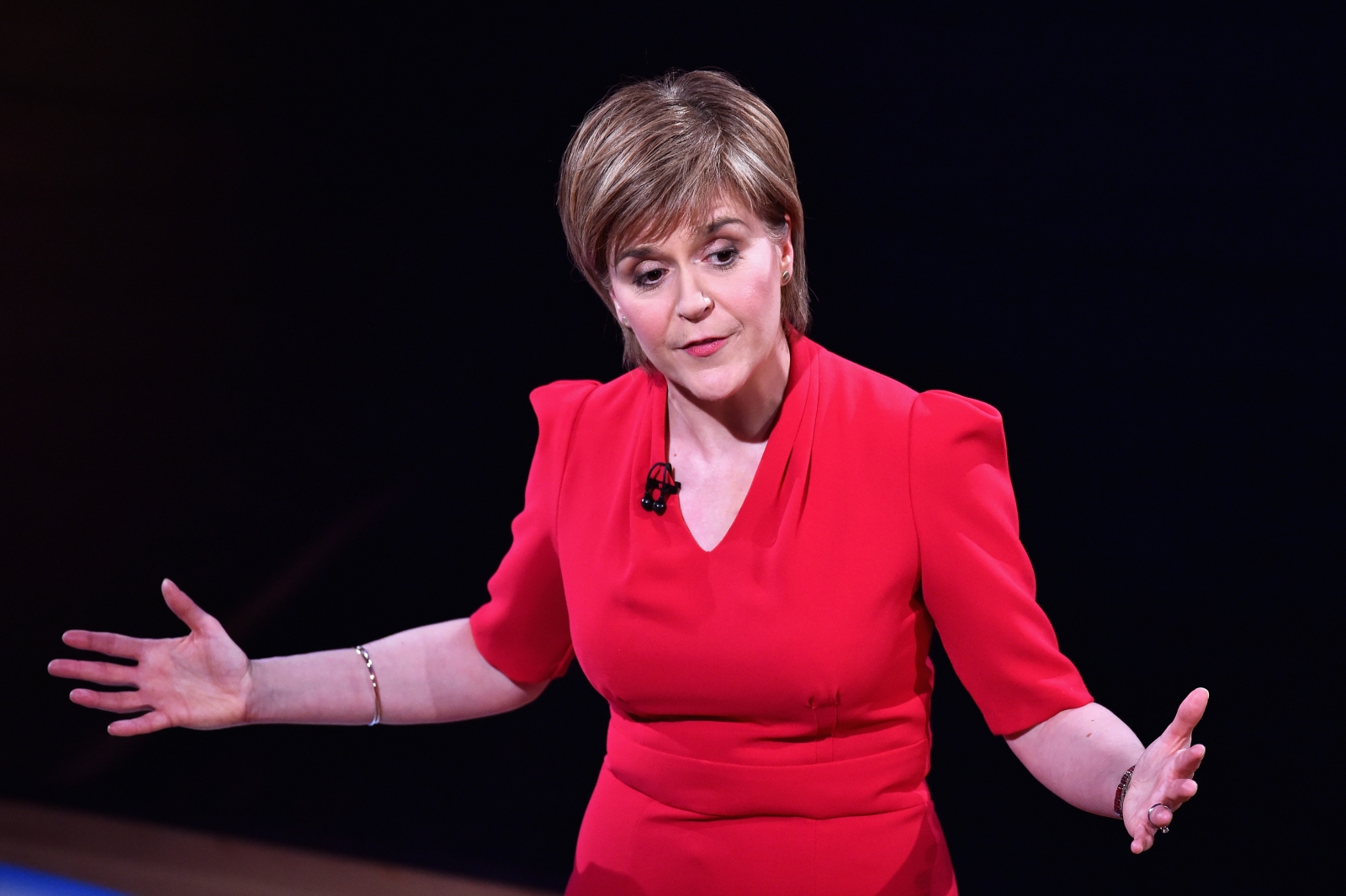

Scotland went SNP in spectacular fashion. The SNP swept to victory in Scotland, claiming all but three of the country's 59 seats. The huge bloc of nationalist MPs that Nicola Sturgeon will be sending to Westminster (led pretty soon, I suspect, by our old friend Alex Salmond) will be a thorn in David Cameron's side. He know's that his small majority means that a few rebels could rob him of the ability to govern, and the SNP will hammer home any advantage they get. However, their principled tradition of not voting on matters which do not affect Scotland will limit considerably their effectiveness. This may leave David Cameron with carte blanche to do as he wishes in England, a worrying prospect.

Turnout remained low, though it increased slightly to 66.1%. The continued refusal of a third of the country to cast their vote is a problem. Those who do not vote as a point of principle are unfortunately indistinguishable from those who simply can't be bothered; those who are frankly unable to find any political party they are capable of giving their support to count just the same in the minds of our political masters as those who just don't care. The fact that turnout is traditionally lowest among those groups (young people, ethnic minorities, the unemployed) who the Tory government will be targeting over the next five years makes this an even bigger issue. 

The number of big names who lost their seats is shockingly high. They call it a Portillo Moment when a political heavyweight falls at the ballot box, but there have been so many this time around that they might have to change the name. Shadow Foreign Secretary Douglas Alexander, Scottish Labour Leader Jim Murphy, Shadow Chancellor Ed Balls, Business Secretary Vince Cable, Energy Secretary Ed Davey, Chief Secretary to the Treasury Danny Alexander... the list is huge. Most are from the Labour or Liberal Democrat parties, and many fell to the SNP in Scotland, but the decimation of the upper ranks of the main political parties - together with the planned departures of old leading lights such as William Hague, Jack Straw, Malcom Rifkind and Gordon Brown - means that the new House of Commons will have a very different dynamic.

The number of women MPs increased by a third. A piece of uncomplicated good news, for a change, and pretty self-explanatory. Before the election 23% of MPs were women; now it is 29%. That is, of course, still 21% short of the ideal, but it is a marked improvement and one we should be very pleased about. One of these new female MPs, the SNP's Mhairi Black, is also the youngest MP elected since 1667, a huge achievement only made more impressive when you consider she took the seat from Douglas Alexander.

The UK's electoral system is STILL very, very broken. I will end with perhaps the most important point: the discrepancy between vote share and seats in the House of Commons continues to be a huge issue. The SNP won 56 seats with just 4.7% of the vote; meanwhile the Lib Dems won 7.9% but only 8 seats. UKIP won a single seat with 12.6% of the vote, the Greens one with 3.8%. The Tories and Labour are separated by 99 seats but only 6.5% in the vote. You get the idea - there is little real connection between vote share and seat share, and this is disenfranchising madness. You can read my article on PR for a solution to the problem, but the short answer is this: we desperately need as electoral system which ensures that Parliament represents the wishes of the people. It's called 'democracy' - you may have heard of it.


  These are just some of the most important results of May the 7th - much more will become apparent over the coming weeks. In the meantime, it is important that the progressives among us redouble our efforts to convince the public that the Tory message of cuts and rampant neoliberalism is not the only way, and far from the best way. May 2020 awaits.

Friday, 1 May 2015

Miliband's Refusal to Work with the SNP is a Huge Mistake for Labour and the UK

  Ed Miliband has dodged the question over whether he would be willing to work with the SNP since the fallout from the Scottish independence referendum catapulted the nationalists to UK-wide prominence. Now, a week before the general election, he has made a seemingly definite promise that he will not.

  This, in short, is ridiculous. Miliband is either lying or a fool.

  For context, the SNP is set to win a significant majority of the Scottish seats in the House of Commons. There are 59 seats in Scotland; the various election forecasts predict they will take anywhere between 49 and 56 of them. An Ipsos-MORI poll a few days ago even predicted a complete wipeout for the other parties, with the SNP holding all 59, though this seems unlikely. However, a seat total of around 50 seems eminently doable.

  This will make Nicola Sturgeon's party the third-largest in the House of Commons almost without doubt; the Liberal Democrats would have to hold almost all of their 57 seats to maintain third place, something which no poll almost since the last election has suggested they will do. The SNP will, therefore, be in a pivotal position of power.

  Nicola Sturgeon has confirmed that the party will not support a Conservative government under any situation. With the Tories and Labour neck-and-neck in the polls, this was Ed Miliband's lifeline. The loss of Labour's Scottish fiefdom to the SNP surge mattered little in Parliamentary terms as long as the option of a deal with Sturgeon's party was on the table. Labour could afford to come a few seats behind Cameron's Tories, because they would be able to call on a healthy 50 or so SNP MPs to support their Queen's Speech.

  Now, however, he has a serious problem. His statement to the Question Time audience last night ruled out not only a coalition, which hasn't really been on the cards for months, but also any 'deal' with the Scottish Nationals. His argument centred around not wanting concede things like scrapping Trident or holding a second independence referendum to Sturgeon's party, but it leaves Labour without their largest possible ally in Parliament. 

  Before last night, Miliband could have struck an agreement with the SNP to support the Labour Party on confidence and supply bills - i.e. budgets and votes of confidence in the government. In doing so, he would have had to concede some things to the nationalists, of course, but Sturgeon had made it quite clear that neither scrapping Trident or holding another referendum were red lines. On most other policy areas, the SNP aren't so far removed from Labour that making some compromises would really have been an issue.

  But Miliband, presumably running scared from the rhetoric of the Tory press that a Labour-SNP deal would threaten the very future of the country, has now ruled this out, with the result that any Labour minority government will now be completely ineffective, not to mention far less likely. 

  Now, the Labour party will have to beat the Tories in terms of seats, and win support from the Liberal Democrats if - as seems likely - the margin of victory is narrower than the 25-30 MPs the Lib Dems are likely to hold. And that is just to be able to form the government.

  Once Miliband is inside No. 10, he will find it almost impossible to govern effectively. The SNP would support a Labour Queen's Speech to stop the Tories getting back in, but once Ed is installed in Downing Street the Scottish Nationals will hold him to ransom over every single vote. The pressure they will exert in such a situation will be far greater than if Miliband had formed a pre-determined deal, and will result in an unstable government which will struggle to pass laws.

  The only saving grace is that the Conservatives will find it even more impossible to govern should they have the edge on May 7th, meaning a Cameron-led government will be prevented from implementing the harsh further cuts to public spending and draconian welfare reforms which have been promised. The SNP will simply vote down any Conservative bills they disagree with, and since there is far less Tory-SNP common ground than Labour-SNP, they will block far more Tory legislation than Labour. Silver linings, and all that.

  That, however, would have happened even if Ed Miliband had not made this monumental error of judgement. The SNP would never have worked with the Tories. Now it looks as if they will be prevented from working with Labour as well. This is one of the few occasions where I actually hope a politician was lying. Otherwise, Mr. Miliband has been very, very foolish indeed.

Saturday, 4 April 2015

Leaders Debate Brings Hope For Progressive Politics

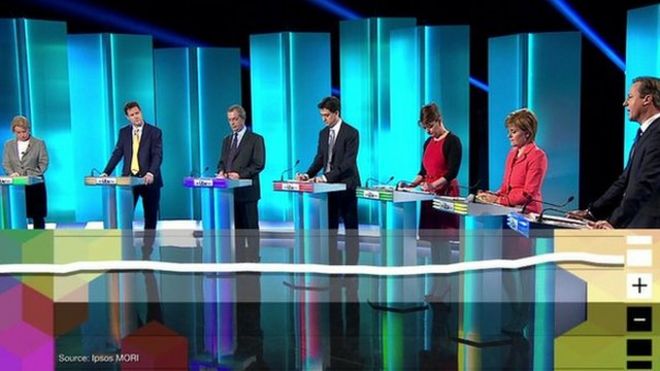
  The leaders' debate on Thursday was a vital opportunity for those with progressive politics to gain some traction in the mainstream of political discourse. With the three establishment parties and UKIP joined by the SNP, Plaid Cymru and the Greens, those of us on the left had something remarkably close to parity with the right. This is something which does not occur very often.

The party leaders on stage in Salford
  Although the polls conducted in the aftermath of the debate show a mixed picture, what is clear from the two-hour clash is that the three women put forward a remarkably distinct vision of Britain's future from the austere narrative of three Westminster parties and the UKIP-driven, isolationist dream of a UK cut off from the rest of the world.

  All three attacked the Lib-Lab-Con austerity programme, pointing out that Ed Miliband talks 'the language of anti-austerity' but in fact has supported many of the measures that the Coalition have implemented which have cut into the economy and our public services. Sturgeon in particular was impressive - something which I did not expect to find myself saying - laying out plans to increase spending over the next few years, which would reduce the deficit at a slower rate but which would help to stimulate demand in the economy, rather than the devastation of massive further cuts.

  Bennett, too, made a hugely important point when she put forward the case for long-term investment. Just because a project cuts a little into the balance sheet now, does not make it not worth doing if it will bring huge benefits for the future - something which many of today's politicians and journalists seem to have forgotten.

  Leanne Wood - despite her slightly, ah, wooden performance - should be applauded for facing down the anti-immigration vitriol of Nigel Farage and defending immigration as something which brings a boost to our economy and immeasurable benefits to our country in terms of cultural diversity. That the leaders of the establishment parties have bought in to Farage's fearmongering on immigration is deplorable, and the Plaid leader was right to speak out.

  Most importantly, though, the leaders of these three left-of-centre parties have injected an intangible but vastly important concept back into political discourse: that politics should be about making life better for people, not just about money and power. If GDP growth slows a little or the deficit takes a year or two longer to pay off, but public services are more easily available and the standard of living for ordinary people goes up, that that is a trade-off worth making. The obsession with unsustainable profiteering which has infected mainstream politics has finally been challenged, in front of a 7.7 million-strong audience.

  Even if the results of Thursday's debate are not felt in time for May the 7th, it is my hope that this will be a watershed moment in British politics. As we move into an era of multi-party elections and co-operative politics, hopefully the rampant individualism of the last thirty-five years will start to fade.   

Monday, 9 March 2015

The Debates Debate

  The leaders' debates were an innovative feature of the 2010 General Election, giving the people of the UK the chance to see the principal contenders for their electoral affection go toe-to-toe over the major issues of the day. So far in 2015, however, they have proved an innovative way for the Conservative Party to waste everyone's time.


The History of TV Debates

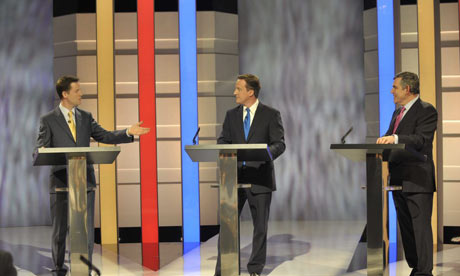
  The original three debates, featuring Gordon Brown, David Cameron and Nick Clegg, took place over a three-week period in the run-up to the election on the 6th of May. The televised verbal duel between the main contenders have been a feature of US Presidential elections for years, but - despite the efforts of previous party leaders to get them introduced since 1964 - they have not been historically used in Britain.

  The main objection to this head-to-head style of pre-election politicking is that it was suited only to a Presidential style of political leadership, which is not the way we do things in Britain. At a General Election, after all, we vote for individual MPs, not for a political party and certainly not for a party leader. In theory.
  
  The reality, of course, is that UK politics has become ever more Presidential over time, with the election and ten-year premiership of Tony Blair - the most President-like leader Britain has ever had in peacetime - sealing its fate. We vote, at election time, in most cases for the party we most identify with rather than the individual candidate that we best like. 

  So, the debates were introduced - at the insistence, mainly, of opposition leaders David Cameron and Nick Clegg. Now, however, Cameron is trying to get out of them. Recognising that the old argument wasn't going to wash in light of his own support of the debates just five years ago, he has turned instead to a plethora of others.


Proposals

  The original proposal for the 2015 pre-election debates - all the way back in October - was for a debate between Cameron and Labour leader Ed Miliband, a second debate also including Nick Clegg, and a third also including UKIP boss Nigel Farage. However, several smaller parties contested this decision - in particular the Green Party, who argued that they were performing on a level more or less equal to the Lib Dems in the polls.

  This began a long saga of political tussling over how exactly the debates should be held. The broadcasters initially rejected the Greens' demand for inclusion, prompting legal action. Cameron then declared he would not take part without the Greens. Miliband, Farage and Clegg wrote letters to the PM demanding he meet their challenge, but Cameron refused to budge.

  In January, the broadcasters announced revised plans: One head-to-head between Cameron and Miliband and two seven-way debates also including Nick Clegg, Nigel Farage, Green Party leader Natalie Bennett, SNP leader Nicola Sturgeon and Plaid Cymru leader Leanne Wood. These plans were then confirmed on the 23rd of February, with the first seven-way to take place on the 2nd of April, the second on the 16th, and the head-to-head on the 30th of April - just a week before the election.


Political Quibbling and David Cameron's Cowardice

  These plans weren't perfect. The DUP and SInn Fein - the two principal Northern Irish parties - both complained that if the SNP and Plaid were involved, they should be too. George Galloway, the single MP for the Respect Party, made a similar argument - if the Greens were to take part, with just one MP, then his party ought to have a chance to speak too. These points are both valid criticisms.

  To my mind, the correct solution would be to have a debate between the leaders of all the parties standing nationally (Conservatives, Labour, Lib Dems, UKIP and the Greens) and then separate debates featuring the Scottish, Welsh and Northern Irish leaders of those parties along with the nationalists. The head-to-head between Cameron and Miliband, as the only two realistic candidates for Prime Minister, also should go ahead. But this is really a side issue.

  Whatever the form of the debates, the main thing is that they should happen. In a system where the policies of political parties, and increasingly the calibre of their leaders, is important to how people cast their votes, we need to be able to see the people clamouring for our support make clear unambiguous statements of their views and then defend them. As David Cameron said back in 2010, they are essential for our democracy. And yet, he has proven the greatest block on them occurring of all.

  His latest objection is that the debates ought not to take place too close to the election, and therefore there isn't time any longer to stage the three debates which have been planned. The fact that the main reason that there is no time left is his own refusal to agree to the broadcasters' plans is clearly not something which bothers him. Instead, he is now calling for a single debate to take place before the end of March, including the seven leaders who the broadcasters have identified. The other seven-way and the head-to-head are to be scrapped.

  Both Cameron and the broadcasters have dug in their heels, the latter threatening to empty-chair the PM if he doesn't turn up. The problem with that, though, is that they might run afoul of pre-election impartiality rules if they allow Miliband to speak for 90 minutes in the 'head-to-head' without Cameron present. So, it becomes a war of attrition - each side trying to batter the other with enough political smears to make them cave in.

  Frankly, the reason for all this is that David Cameron is running scared. His delaying tactics have all been a ruse to fill out the larger debates with as many leaders as possible, in essence to reduce the airtime of Nigel Farage, who he knows will cut percentage points into Tory support with every minute he gets to speak. 

  His objections to the head-to-head debate are less obvious, but he fears Miliband may prove more competent in debate than people will expect him to. Most people's opinion of the Labour leader is the media-fuelled caricature of him as a bumbling buffoon, and whilst he certainly isn't the most charismatic leader Labour have ever had, he is a far more skilled public speaker than is perhaps apparent.


Conclusions

  At this point, it looks increasingly unlikely that the debates will happen. If they do, they will most likely be reduced to Cameron's ultimatum of the single seven-way debate before the short campaign starts on March 30th. Since this will mean having them before the parties have even published their manifestos, this makes the entire process rather less meaningful.

  Through his constant prevarications and craven cowardice, David Cameron has all but scuppered what he himself claimed were debates 'essential to our democracy'. The Prime Minister's commitment to the ideals of 'democracy' have surely to be questioned, therefore. Once again, a leading politician has put politicking before principles and sacrificed the people's right to make an informed choice about their leaders on the altar of grabbing a possible head start in the political race for No. 10.

  It is a sickening display, and he should be fully ashamed of himself. But I doubt he cares.

Saturday, 8 November 2014

Who Rules The World?

Forbes has released its annual 'The World's Most Powerful People' list - so who's on it?

  For the last five years, American business magazine Forbes has published a list of the world's most powerful people alongside its traditional rich list. The new edition is out today, so without further ado, let's take a look at the top ten.


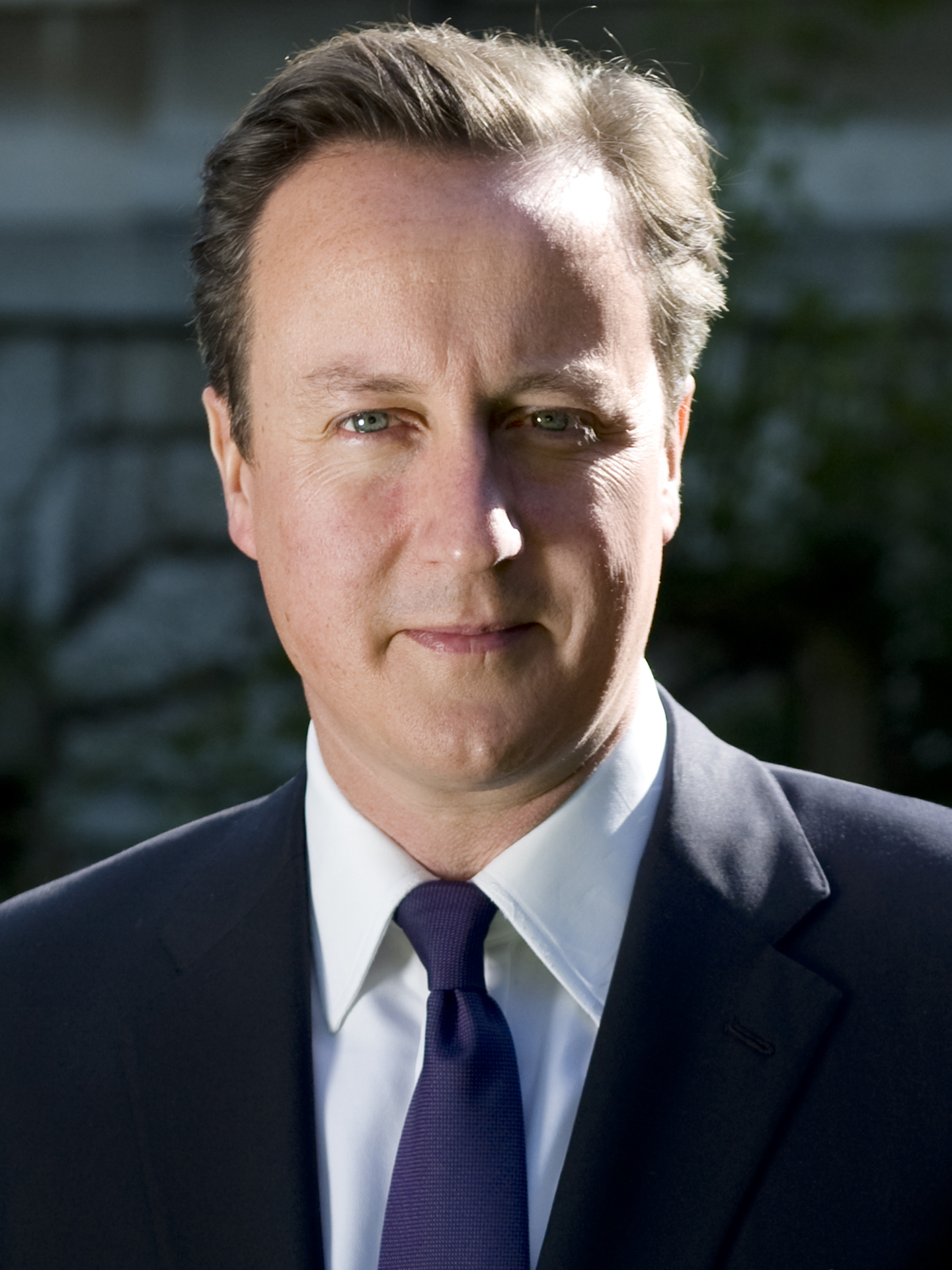
No.10: David Cameron

  David, as I'm sure most of you are aware, is our own darling Prime Minister. Educated at Eton and Oxford University, he was elected to the House of Commons in 2001 for Witney in Oxfordshire. As the current Prime Minister of the United Kingdom, he is in overall charge of the seventh-richest economy in the world and the sixth-best-funded military. Cameron has climbed a place since last year, presumably due to his stronger position internationally in the wake of a successful vote for 'No' in the Scottish Independence referendum and the increase in the UK's GDP. It should be noted, however, that this power is highly conditional; upon the favour of his increasingly fractious party, and of course upon the outcome of the General Election next May. 

No. 9: Sergey Brin & Larry Page

  The Google co-founders are in joint-ninth place; this is a considerable jump from seventeenth last year. They own 14% of the company, and control 56% of its stockholder voting power - this gives the Stanford University classmates, then, effective control of the company. With an equity of over $87 billion as of last year, and still rising, it is the third biggest company by market value in the world. Brin and Page's power comes not just from Google's value, though, but also from its domination (65%) of global online search traffic and the influence this gives them in controlling the flow of information. With Google seemingly unstoppable in its rise, they could well have ascended still higher by next year.

No. 8: Mario Draghi

  Draghi is probably one of the least well-known names on this list; as President of the European Central Bank, though, he is one of the most powerful men in Europe, essentially at the heart of EU monetary policy since 2011. Though very much a behind-the-scenes individual, Draghi's power should not be underestimated - particularly in the current economic climate, where the recommendations of this institution do so much to determine the destiny of the EU as a whole. As the man responsible for propping up much of the European financial sector, the Roman banker, despite his unobtrusive public role, is one of the big beasts of European politics.

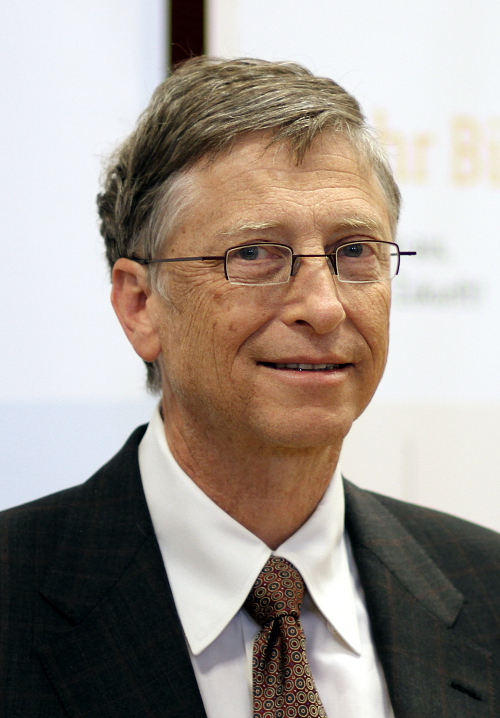
No. 7: Bill Gates


  Bill Gates has slipped a place since last year - though he retains pole position in the parallel rich list. The Microsoft founder is no longer Chairman of the company, nor - since May - the largest shareholder; he does, however, still own a significant interest in the computer giant, and as co-trustee of the Bill & Melinda Gates Foundation is one of the world's major philanthropists. His personal fortune and extensive network of contacts are the reason for his position on the list; his huge personal following is also a major asset - his participation in the ALS Ice Bucket Challenge was one of the major steps in its mass popularisation, for example.

No. 6: Janet Yellen

  Yellen is the new Chairman of the Federal Reserve: the huge, complex, semi-independent system of financial institutions which acts as the central bank of the USA. The Reserve is partly private in ownership, and exists to serve the interests of private banking firms as much as the state; it is, nevertheless, responsible for monetary policy and some aspects of economic policy within the USA. Yellen is the first woman to helm the gargantuan financial system; she has been described as a 'dove', meaning her focus is on keeping unemployment low rather than inflation - though both are important parts of her mandate. 

No. 5: Angela Merkel


  A consistent holder of the number five spot, the German Bundeskanzler is the pre-eminent politician within the European Union, with Germany the largest economic power within the union. As with any elected politician, her position on the list is of course vulnerable to electoral fortunes; however, the fact she has been in power for nine years and remains popular suggests Merkel will not be disappearing from the upper echelons of power any time soon. Her current challenge is, along with Mario Draghi, to prevent the Eurozone from slipping back into recession - that and dealing with the recalcitrant Cameron and the UK's flirtations with an EU exit.

No. 4: Pope Francis I

  The Catholic leader has maintained his fourth place position from last year; as the only religious leader in the top ten, Francis is something of an oddity among the ranks of politicians, bankers and entrepreneurs. The 77-year-old Argentinian is the first non-European Pope in over 1200 years; more, he has proved himself a zealous reformer, making an effort to strip some of the ostentatiousness and politicking from the Vatican. He has made himself no few enemies in the process, but - the days of Papal regicide being surely behind us - there is little they can do. Francis remains dedicated to catholic doctrine, however, and his influence over the 1.2 billion Catholics worldwide cannot be underestimated.

No. 3: Xi Jinping

  Xi is China's 'Paramount Leader', holding the three offices of General Secretary of the Communist Party, president of the People's Republic and Chairman of the Central Military Commission. China is now the world's largest economy and has the largest standing army; it threatens the USA, therefore, as the dominant global power. Chinese decision-making is now more consensual than in previous years, but Xi nevertheless wields huge power within the authoritarian People's Republic. He has undertaken reforms to reduce corruption and increase the importance of markets within the Chinese economy.

No. 2:  Barack Obama

  The IS insurgency in Iraq and Syria, the turbulence in Missouri over the murder of Michael Brown and consistent clashes with the Republicans stopped Obama from claiming the top spot for the second year in a row. His position as he heads into the final quarter of his Presidency is rocky and, though he heads a growing US economy, his de facto power has been severely curtailed by the Republican seizure of the Senate in the US Midterms. This will necessitate a focus on foreign policy in the last two years of his premiership, but IS and the situation in the Ukraine may well be too difficult for him to resolve. In summary, this man - whilst powerful on paper - is in reality relatively toothless in the face of concerted opposition at home and abroad.

No. 1: Vladimir Putin

  The Machiavellian Russian President has edged his American counterpart into first place for the second year running, and indeed the last year has gone fairly well for Putin. He has achieved an astounding level of control within the Russian Federation itself and now, with the Crimea back under Russian control and the east of the Ukraine dissolving into chaos - to the Russians' benefit - his position regionally is strong indeed. Putin suffers from a problem in international opinion, of course - but that doesn't seem to bother the man; nor the Chinese, who have just agreed a $70 billion gas pipeline deal with the increasingly rogue northern state. Putin will not be easily dislodged from first place on this list.

Wednesday, 15 October 2014

Politicians: They Won't Change Unless We Make Them

For decades, and particularly since the expenses scandal of 2009, politicians have grown steadily more despised - but why should they change?

  An ICM poll, published in the Guardian on October the 13th, gave us some interesting information on the state of politics in October 2014. The party polling itself was fairly standard fare - the only real point to note is the expected 5-point increase in UKIP's share in the wake of Douglas Carswell's election in Clacton - but more interesting is the data on the leaders' personal ratings, shown below:


  One point to raise straightaway is the absence of two individuals: Natalie Bennett, leader of the Green Party (expected, due to the outrageous anti-Green media bias) and Nick Clegg. Clegg's absence is particularly telling - it demonstrates the total lack of regard given to the now-decimated Liberal Democrats. But more important still is the data itself.

  Notice the numbers on the graphs. It will not escape your notice that they are all significantly below zero. Now, it is clear that certain leaders have strengths in certain areas: Farage leads significantly on perceived ability to understand the public and on perceived honesty, while Miliband is clearly ahead on looking after the interests of the many over the few. 

  Farage's party, then, will use these data to improve their anti-establishment credentials; Labour will (cautiously, so as to avoid cries of 'evil socialism) capitalise on the sense that they, not UKIP, are the true party of the working classes. Cameron will do his best not to mention them at all. But none of these approaches get to the real heart of the matter - and why would they? It is in the interests of all the neoliberal parties not to raise this question. So It's going to have to be me.

  The question is this: Why are our politicians so awful that we are having to differentiate between different degrees of negative publicity just to draw out some meaningful comparison?

  At the end of the day, it shouldn't matter that Ed Miliband is only 10 points below par at looking after the working classes while Farage and Cameron are 20 points below, because the key thing is this: They are ALL seen as terrible. Even 'anti-establishment', flavour-of-the-month UKIP has a leader seen as generally incapable across these three fairly broad categories. The fact that one leader might be slightly less bad than the other two should be irrelevant. The only reason it isn't is because the leaders are more or less identical, so the minutiae become suddenly vital differentiators.

  Why, then, do our political masters get away with being seen as universally useless? Sadly, the answer is because we let them. This most recent poll makes one thing clear - despite seeing their leaders (two potential Prime Ministers and a potential Deputy Prime Minister) as incompetent, 80% of the population who state they are likely to vote in May 2015 are planning to vote for either Labour, UKIP or the Conservatives. Add in the Lib Dems - whose neoliberal policies make them virtually identical to the other three, despite their current disfavour - and that's 91%.
  Even worse than this overwhelming lemming-style rush towards parties which these data prove we have no enthusiasm for is the number of people planning not to vote at all. The same poll shows that 23% of people rate themselves as 50% certain or less to vote, with 10% saying already that they definitely won't. Results from past elections show that, on average, around a third of voters do not vote on polling day. I've spoken at length about voter apathy before, so i won't wax lyrical about it here, but this also feeds into the overall issue.

  And that issue is this: Politicians won't change, they won't become any better than their current abysmal low, until we make them. And, much as Russell brand would have you believe otherwise, refusing to participate - tempting as it is - will not do that. Neither will voting for parties who espouse the same hypocritical, neoliberal-authoritarian post-Thatcherite political consensus as the Tories - and that includes UKIP as well as Labour and the Lib Dems. 

  The only way to force a change is to get involved. Campaign on issues which animate you, which make your blood boil; speak out when things occur in the world which are unfair; vote when polling day comes around, and for the Greens or the nationalists or any other party which challenges the status quo. But don't limit yourself just to voting - Brand is right about that: the once-every-five-years electoral ballot is the establishment's way of keeping us quiet in between. Fight for the things you deserve and for what you believe in, and maybe - just maybe - we might get some politicians who aren't universally reviled.

  One can but hope.

Saturday, 27 September 2014

Here We Go Again

  MPs in the House of Commons yesterday voted by 524 to 43 in favour of UK airstrikes against IS targets in Iraq. Ladies and gentlemen, here we go again. Barack Obama last week became the fourth successive US President to declare on live television an American bombing campaign in the Iraq region; now, David Cameron joins him in declaring military action in the failing state just three years after the last British forces withdrew from the country.

  War in Iraq seems to have become something of a hobby for the Anglo-American military-industrial complex. This time, though, we are not fighting the iron-fisted tyrant that was Saddam Hussein - instead, the enemy is a group of ultra-radical fundamentalist Islamists; a group whose interpretation of the Qur'an combins the worst evils of the early campaigns of bloodshed emanating from seventh-century Medina and more modern Wa'habist ideologies of an ultra-strict religious conservatism and adherence to a twisted brand of Sharia law. A target, therefore, one might think worthy of Britain's aggression? Perhaps.

  The problem is, though, so much of the current problem is derived directly from the Iraq War of 2003 and the earlier Gulf War of 1990. Despite the protestations of senior government figures to the contrary, blowback from overseas theatres of war is a real and present problem, and the history of modern British and American involvement in the Middle East is scarred with it. From the Afghan campaigns of the 1980s, which kickstarted the rise of the Taliban, to the brutal murder of Drummer Lee Rigby last May - whose perpetrators explicitly stated their aim as revenge for slaughtered Muslims in Iraq - the US-UK alliance is dogged by bloody reprisals against their people for the governments' actions abroad.

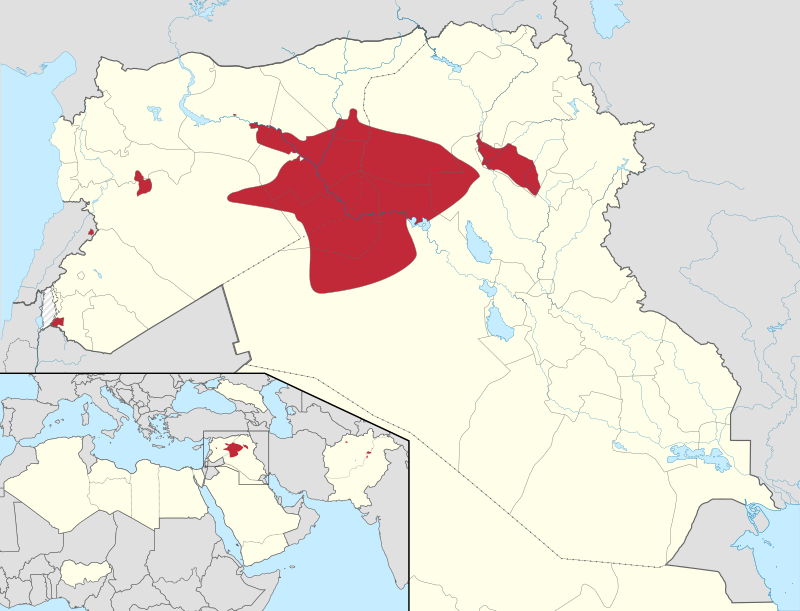
The territory controlled by the IS as of 22/09/14
  The success of the Islamic State, formerly an al-Qaeda offshoot, is based to a not inconsiderable degree on the violent actions of Western powers in the Middle East over the last half-century or so. The Arab Spring may have destabilised the region enough for ISIS to emerge in Syria, but it has been the justified hatred of Western interventionism which has helped to fuel its transformation from one of many small rebel groups set against the Assad regime to a de facto independent country straddling the borders of two of the regions former powers, and it is the weakness and sectarianism of Iraq in the wake of the Alliance's disastrous earlier invasion which has allowed the armies of Islamist extremism to run roughshod across the lands once home to the greatest civilisations on Earth.

  So, here we go, back into Iraq. So far the UK - along with the other European powers participating in the action (Denmark and Belgium) - are loathe to expand operations into Syria, but now that the USA has taken that step, in defiance of Assad's protestations of illegality, it can only be a matter of time. This war will be one without borders, one which Cameron has said could take three years but which could easily last five times that. Another war in an unstable area, and what will we be left with at the end of it? Two shattered states, a Middle East infected with a stronger poison of religious extremism than ever before and greater and greater hatred for the 'Great Satan' of Western intervention.

  And that's assuming we even win.

Friday, 19 September 2014

It's All Over - Except It's Not

  Well, there we go. That's that, as they say. Scotland, land of haggis and whisky (of which I'm fond) and of bagpipes and tartan (of which I'm not so fond) has voted in what was probably the defining moment in recent British political history. The result, a 10-point win for the No campaign, on the back of a turnout of 84.6%, is not the vast thrashing of the Independence campaign which was predicted when the referendum was called, but it is a significant enough margin to settle the question for some time.

  But, I'm afraid, that's not quite the end of it. In fact, not by a long shot. It has been clear for some years, and most especially for the last fortnight or so, that the status quo simply will not be acceptable to Scotland for any longer. The fallout from the referendum will send shockwaves through Scottish politics, and it will profoundly affect the rest of the Union too. The Scots may have gone for No, but this emphatically doesn't mean No Change.


Scottish Devolution

  With the current Devolution plans under the Scotland Act 2012 lay out some powers which will be transferred to Scotland over the next two years. These include a replacement of UK Stamp Duty by a Scottish version, the ability for the Scottish Government to borrow from the capital markets and issue government bonds and - crucially - the cutting of the UK Income Tax in Scotland to 10%, with the Scottish Government responsible for setting a separate rate to make up the shortfall, which would allow Scotland to vary overall Income Tax rates from the UK standard of 20%. 

  Let's be clear, these powers are to go to the Scots, regardless of what happens over the next few months. However, there are now proposals on the table for new Scottish powers from each of the three main Westminster parties. These new powers will be needed to assuage the demand for greater autonomy which 1.6 million votes for independence demonstrates. There are differences between the parties on what these powers should be, however.

  Labour Proposals   [SOURCE: Scottish Labour Devolution Commission - Executive Summary]

  • The Scottish Parliament to be made a permanent feature of the UK constitution
  • The Scottish Parliament to have administrative authority over Scottish Parliament elections
  • The Scottish Government to raise approx. 40% of its own tax revenues
  • UK Income Tax rate in Scotland to be reduced to 5% rather than 10%
  • The Scottish Government to be able to vary different Income Tax bands by different amounts
  • Retention of the Barnett Formula for the Scottish block spending grant
  • Housing Benefit to be devolved to the Scottish Parliament
  • Greater powers for the Island Communities - Orkney, Shetland and Eilean Siar

  Conservative Proposals   [SOURCE: Commission on the Future Governance of Scotland]

  • Income Tax entirely devolved to the Scottish Parliament
  • Official Scottish Fiscal Commission to be established
  • Possible devolution of Housing Benefit
  • Possible ability for the Scottish Parliament to supplement UK social security payments
  • Retention of the Barnett Formula for the Scottish block spending grant

  Liberal Democrat Proposals   [SOURCE: Federalism: the best future for Scotland]

  • Power of Initiation, allowing the Scottish and Westminster Parliaments to request actions of one another
  • Devolution of Income Tax to the Scottish Parliament
  • Devolution of Inheritance Tax and Capital Gains Tax
  • The proceeds of Scottish corporation tax to be assigned to the Scottish Government
  • Retention of the Barnett Formula for the Scottish block spending grant until a new formula is agreed
  The rhetoric generally is that Labour's proposals are the least extensive, but this is mainly focusing on the slightly weaker offer on Income Tax. In fact, overall it is clear that it is the traditionally Unionist Tories who have made what I would consider the least attractive offer. For a new devolution settlement to work, though, all three parties will have to agree a package of powers, which will then have to be agreed with the SNP. The man in charge of this process is the Lord Robert Smith, Baron of Kelvin, who also ran the Glasgow Commonwealth Games earlier this year. A White Paper is planned for January. Watch this space...


Winners and Losers

  The big loser of this referendum has been Alex Salmond. Despite cutting No's lead from 22 points two months ago to just 10 in the referendum, Salmond has announced his decision to step down both as SNP leader and First Minister of Scotland in November. This leaves the way open for his popular deputy, Nicola Sturgeon, long tipped as his sucessor to take the reins of power. With so long under Salmond, this could prove a real shake-up for the Scottish Nationals.

  The biggest sigh of relief was likely breathed by David Cameron, for whom a Yes vote could have meant a vote of no confidence in the commons and the loss of his premiership. Ed Miliband, too, was likely a little anxious in the run-up to this vote, as a failure for Better Together would likely have been seen as a failure of Labour to successfully challenge the SNP - and thus a damning indictment of his London-centric leadership. Both major party leaders were staring down the barrel of a gun pointed straight at their careers; the No vote has saved them. For now.

  The star of the show, though, has undoubtedly been Gordon Brown. Alistair Darling's leadership of Better Together has been criticised for his lack of charisma and failure to stand up to Salmond, but Brown's fiery eve-of-referendum speech appeared to more than make up for that. It is hard to say just how much his intervention contributed to the eventual success of the No campaign, but calls for the ex-Prime Minister to return to front-line politics after more than four years - perhaps as leader of Scottish Labour - demonstrate how much public opinion he has won by speaking out.


What About the English?

  Almost as soon as the No result was clear, prominent English politicians began their calls for English devolution to match the Scots. Both David Cameron and Ed Miliband mentioned the so-called West Lothian Question in speeches today - Why should Scottish MPs, with significant and growing powers over Scotland now in the hands of the Scottish Parliament, continue to vote on English matters at Westminster? - with Nigel Farage among the many others taking up the cry.

  The Conservative backbenches are pushing for 'English votes on English laws' within the current Westminster Parliament, a solution which would settle the question in the short term. However, Labour - who would find it difficult to get approval for their English agenda under such a system, given their partial reliance on Scotland and Wales for their Parliamentary majorities - are going to take some convincing. Meanwhile, the more interesting - and controversial - question of an English executive, complete with ministerial departments and a possible First Minister of England, has also been floated. Whatever happens, one thing is clear - England will not be satisfied with the status quo either.


  It is clear, then, that a No vote in Scotland does not mean that the leaders of the Westminster parties can rest on their laurels. Independence may have been rejected, but change is coming to the UK - and not before time, either. 


[NOTE: A previous version of this article stated Alex Salmond was unlikely to step down as SNP leader. He announced his intention to do so while I was finishing writing this piece. That'll teach me to make predictions]

Thursday, 10 April 2014

Explaining...the Conservative Party

Background

  The Conservative Party was officially founded in 1834, but traces its roots to 1678 and the formation of the Tory Party - a name the modern party still bears. The Conservatives merged with the Liberal Unionists in 1912, giving the party its rarely-used official name of the Conservative and Unionist Party.

  The party spent 57 years of the twentieth century in government, with leaders such as Winston Churchill and Margaret Thatcher some of the most famous figures in recent British history. From 1945 to 1975, the party espoused the post-war social democratic economic consensus established by the Attlee governments of 1945-551; after 1975, however, the party under Thatcher's leadership swung to the right and the Conservative governments of 1979-1997 saw the dismantling of the post-war consensus and the establishment of the neoliberal economic orthodoxy as the lynchpin of British political discourse.


The Party Today

  The modern Conservative Party has 174,000 members and is led by David Cameron MP. The Conservatives are the largest party in the current Coalition government, with the Liberal Democrats as their junior partner. They won 36.1% of the popular vote in the 2010 General Election and currently hold 302 seats in the House of Commons (46.5%). They also have 19 seats in the European Parliament (26% of the UK total) and 40.3% of Local Government positions.


Policy Record

  The modern Conservative Party dates from 1975; its principal actions from 1979 to 1990 under Margaret Thatcher were the lowering of direct taxes in favour of raised indirect taxes; the privatisation of major national infrastructure and industry including British Steel, British Telecom, British Airways and British Petroleum; the increase in police powers and numbers; and the deregulation of the financial sector. Thatcher was also largely responsible for the introduction of the Single European Act, introducing freedom of movement in goods, services, capital and labour throughout the EEC.

  Under John Major, privatisation continued with that of British Rail. Most other policies remained consistent from the Thatcher era, while Major pursued a controversial policy of integration with Europe, signing the Maastricht Treaty in 1992. Conservative economic incompetence led to the catastrophe of Black Wednesday and sparked a recession, eventually culminating in a Labour landslide victory in 1997. In opposition, the party adopted the minimum wage and opposed strongly the UK joining the Euro. Under Michael Howard, it became increasingly critical of the USA and of the Iraq War.

  Since the return to government under David Cameron, the Conservative Party has followed a programme of vast public spending cuts, coinciding with a sharp rise in borrowing. They have continued the privatisation of earlier Conservative governments with the sell-off of Royal Mail and have ceded control of many schools through the academies and free schools programmes and parts of the NHS through tranfer of some services to private companies. The party has also pursued a slashing of the social security budget through the introduction of Universal Credit, the benefit cap and the so-called 'bedroom tax'. Promised environmental reforms have not materialised, and whilst the introduction of behind-closed-doors trials for some crimes and the reinforcement of security service surveillance powers have strengthened the coercive state, military expenditure and troop numbers have been drastically cut.


Policy Promises


  Economics
  • Eliminate the deficit by 2018
  • Raise of the tax-free Personal Allowance to £12,500 by 2020
  • Raise of the threshold for the 40% income tax band to £50,000
  • Further reduce public sector pay
  Social Policy & The Constitution
  • Maintain of the SMP system for General Elections
  • Replace of the Human Rights Act with a British Bill of Rights
  • Prevent non-English MPs from voting on English-only Bills in the House of Commons
  Health, Welfare & Education
  • Maintain current NHS budget in real terms
  • Lower benefit cap to £23,000
  • Ensure patient access to GPs 7 days a week
  Crime and Justice Policy
  • Introduce extremism prevention orders to ban radical speakers from communication channels
  Foreign Policy and Defence
  • Help deal with Islamic State
  Europe
  • Renegotiate the UK's membership of the EU, with particular focus on migration
  • Hold a referendum on UK membership of the EU by the end of 2017
  • Support the TTIP trade compact between the EU and the USA
  Transport, Energy & Environment
  • Complete the HS2 and HS3 high-speed rail links

Important Party Figures

  Cabinet Ministers
  • David Cameron       Prime Minister and Leader of the Party
  • George Osborne     Chancellor of the Exchequer
  • Theresa May            Home Secretary
  • Phillip Hammond     Foreign Secretary
  • William Hague          Leader of the House of Commons
  • Iain Duncan Smith   Work and Pensions Secretary
  • Chris Grayling         Justice Secretary
  • Michael Fallon         Defence Secretary
  • Jeremy Hunt            Health Secretary
  • Eric Pickles              Local Government Secretary
  • Nicky Morgan          Education Secretary
  • Justine Greening    International Development Secretary
  • Theresa Villiers       Northern Ireland Secretary
  • Stephen Crab           Wales Secretary
  • Sajid Javid               Culture Secretary
  • Elizabeth Truss        Environment Secretary
  Others
  • Michael Gove           Chief Whip
  • Grant Schapps         Co-Chairman of the party
  • Andrew Feldman      Co-Chairman of the party
  • Boris Johnson          Mayor of London
google-site-verification: google3c44c0a34dc56f57.html