Showing posts with label Green Party. Show all posts

Saturday, 4 April 2015

Leaders Debate Brings Hope For Progressive Politics

  The leaders' debate on Thursday was a vital opportunity for those with progressive politics to gain some traction in the mainstream of political discourse. With the three establishment parties and UKIP joined by the SNP, Plaid Cymru and the Greens, those of us on the left had something remarkably close to parity with the right. This is something which does not occur very often.

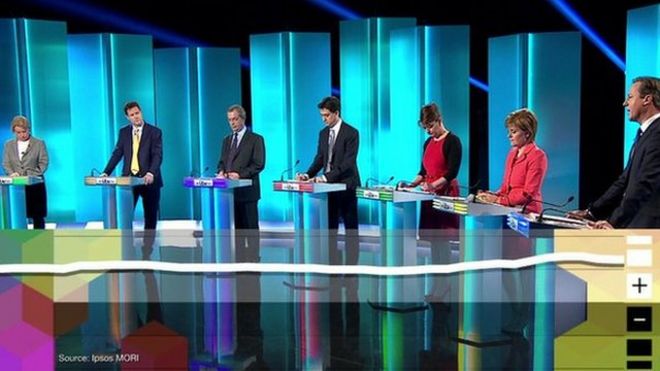
The party leaders on stage in Salford
  Although the polls conducted in the aftermath of the debate show a mixed picture, what is clear from the two-hour clash is that the three women put forward a remarkably distinct vision of Britain's future from the austere narrative of three Westminster parties and the UKIP-driven, isolationist dream of a UK cut off from the rest of the world.

  All three attacked the Lib-Lab-Con austerity programme, pointing out that Ed Miliband talks 'the language of anti-austerity' but in fact has supported many of the measures that the Coalition have implemented which have cut into the economy and our public services. Sturgeon in particular was impressive - something which I did not expect to find myself saying - laying out plans to increase spending over the next few years, which would reduce the deficit at a slower rate but which would help to stimulate demand in the economy, rather than the devastation of massive further cuts.

  Bennett, too, made a hugely important point when she put forward the case for long-term investment. Just because a project cuts a little into the balance sheet now, does not make it not worth doing if it will bring huge benefits for the future - something which many of today's politicians and journalists seem to have forgotten.

  Leanne Wood - despite her slightly, ah, wooden performance - should be applauded for facing down the anti-immigration vitriol of Nigel Farage and defending immigration as something which brings a boost to our economy and immeasurable benefits to our country in terms of cultural diversity. That the leaders of the establishment parties have bought in to Farage's fearmongering on immigration is deplorable, and the Plaid leader was right to speak out.

  Most importantly, though, the leaders of these three left-of-centre parties have injected an intangible but vastly important concept back into political discourse: that politics should be about making life better for people, not just about money and power. If GDP growth slows a little or the deficit takes a year or two longer to pay off, but public services are more easily available and the standard of living for ordinary people goes up, that that is a trade-off worth making. The obsession with unsustainable profiteering which has infected mainstream politics has finally been challenged, in front of a 7.7 million-strong audience.

  Even if the results of Thursday's debate are not felt in time for May the 7th, it is my hope that this will be a watershed moment in British politics. As we move into an era of multi-party elections and co-operative politics, hopefully the rampant individualism of the last thirty-five years will start to fade.   

Friday, 21 November 2014

Deja Vu: UKIP By-Election Victory. Again

  Yesterday’s by-election was more or less a foregone conclusion, with the Tories’ original promise to ‘throw the kitchen sink’ at Rochester & Strood having been ashes in the mouth of the Prime Minister for at least a week. So, Mark Reckless – UKIP’s candidate – retakes the seat he held as a Conservative MP from 2010, and no-one in the country with so much the suggestion of a finger on the fluttering political pulse of the nation should be at all surprised.

  That doesn’t mean the win is insignificant, however – not by any means. There have been noises for a few days now about a UKIP win triggering at least two more defections from the Tories. There are about as many candidates for this as there are Tory backbenchers, but two frontrunners are the arch-Eurosceptic Peter Bone – who has called for UKIP and the Tories to work together in the past – and John Baron, who when questioned about whether he would defect replied with the deliciously clichéd ‘never say never’.

  With the General Election approaching fast, it is more and more unlikely that the new tradition of forcing a by-election if you decide to jump ship to Farage’s mob would hold. Therefore, any future defections could well be automatic, potentially swelling the ranks of UKIP substantially in the run-up to May 2015. However, whilst Farage will be keen of course to pinch as many Tories as he can get his made-in-the-UK purple mittens on, what he is really after now is a Labour defector. This would fit in with his growing narrative about UKIP being a party of neither the left nor the right – and, considering polling shows their appeal among former Conservative voters is approaching its critical mass, it is looking increasingly necessary if UKIP want to keep up their admittedly impressive momentum.

  And what about Rochester & Strood itself? Well, with a much-reduced majority of 7.3% on a low turnout of just 50%, Reckless is far from secure. Lord Ashcroft’s polling shows that the Tories are likely to reclaim the seat in 2015, when – as Grant Schapps put it this morning – ‘the future of the country will be on the ballot paper’. Lib Dem, Labour and even Green supporters might be willing to lend their votes to the Tories to keep out a UKIP MP for a full parliament where they were not willing to do so for the sake of five months. We shall see.

  Speaking of the other parties, it didn’t go too well for them either. The swing against Labour was -12%, nearly as much as against the Tories, while the Lib Dems got just 1% and lost their deposit once again. The Green Party, meanwhile, continued their recent trend of thrashing the Lib Dems into fourth place with 4% at the expense of some of the Labour vote. Sixth place, for those who are interested, went to a dominatrix who was last year voted Britain’s favourite sex worker. She got just 300 votes less than the Lib Dem candidate.


  To summarise: UKIP continue their march, while the Tory and Labour high commands will be quaking in their respective boots at the prospect of further defections. The Greens are still doing quite well and the Lib Dems look like the next general election may well see them wiped off the face of the Earth. 2015 is going to be an interesting one, methinks.

Wednesday, 15 October 2014

Politicians: They Won't Change Unless We Make Them

For decades, and particularly since the expenses scandal of 2009, politicians have grown steadily more despised - but why should they change?

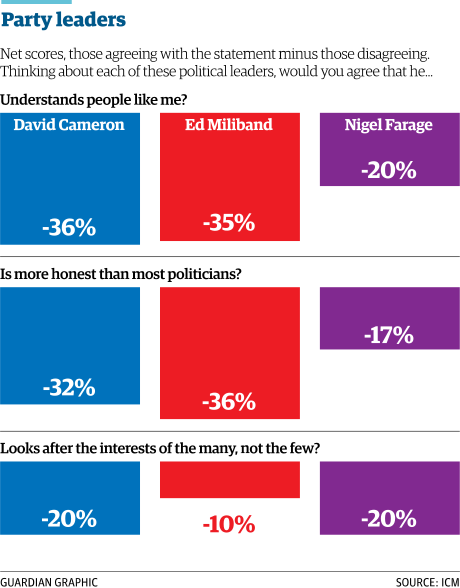
  An ICM poll, published in the Guardian on October the 13th, gave us some interesting information on the state of politics in October 2014. The party polling itself was fairly standard fare - the only real point to note is the expected 5-point increase in UKIP's share in the wake of Douglas Carswell's election in Clacton - but more interesting is the data on the leaders' personal ratings, shown below:


  One point to raise straightaway is the absence of two individuals: Natalie Bennett, leader of the Green Party (expected, due to the outrageous anti-Green media bias) and Nick Clegg. Clegg's absence is particularly telling - it demonstrates the total lack of regard given to the now-decimated Liberal Democrats. But more important still is the data itself.

  Notice the numbers on the graphs. It will not escape your notice that they are all significantly below zero. Now, it is clear that certain leaders have strengths in certain areas: Farage leads significantly on perceived ability to understand the public and on perceived honesty, while Miliband is clearly ahead on looking after the interests of the many over the few. 

  Farage's party, then, will use these data to improve their anti-establishment credentials; Labour will (cautiously, so as to avoid cries of 'evil socialism) capitalise on the sense that they, not UKIP, are the true party of the working classes. Cameron will do his best not to mention them at all. But none of these approaches get to the real heart of the matter - and why would they? It is in the interests of all the neoliberal parties not to raise this question. So It's going to have to be me.

  The question is this: Why are our politicians so awful that we are having to differentiate between different degrees of negative publicity just to draw out some meaningful comparison?

  At the end of the day, it shouldn't matter that Ed Miliband is only 10 points below par at looking after the working classes while Farage and Cameron are 20 points below, because the key thing is this: They are ALL seen as terrible. Even 'anti-establishment', flavour-of-the-month UKIP has a leader seen as generally incapable across these three fairly broad categories. The fact that one leader might be slightly less bad than the other two should be irrelevant. The only reason it isn't is because the leaders are more or less identical, so the minutiae become suddenly vital differentiators.

  Why, then, do our political masters get away with being seen as universally useless? Sadly, the answer is because we let them. This most recent poll makes one thing clear - despite seeing their leaders (two potential Prime Ministers and a potential Deputy Prime Minister) as incompetent, 80% of the population who state they are likely to vote in May 2015 are planning to vote for either Labour, UKIP or the Conservatives. Add in the Lib Dems - whose neoliberal policies make them virtually identical to the other three, despite their current disfavour - and that's 91%.
  Even worse than this overwhelming lemming-style rush towards parties which these data prove we have no enthusiasm for is the number of people planning not to vote at all. The same poll shows that 23% of people rate themselves as 50% certain or less to vote, with 10% saying already that they definitely won't. Results from past elections show that, on average, around a third of voters do not vote on polling day. I've spoken at length about voter apathy before, so i won't wax lyrical about it here, but this also feeds into the overall issue.

  And that issue is this: Politicians won't change, they won't become any better than their current abysmal low, until we make them. And, much as Russell brand would have you believe otherwise, refusing to participate - tempting as it is - will not do that. Neither will voting for parties who espouse the same hypocritical, neoliberal-authoritarian post-Thatcherite political consensus as the Tories - and that includes UKIP as well as Labour and the Lib Dems. 

  The only way to force a change is to get involved. Campaign on issues which animate you, which make your blood boil; speak out when things occur in the world which are unfair; vote when polling day comes around, and for the Greens or the nationalists or any other party which challenges the status quo. But don't limit yourself just to voting - Brand is right about that: the once-every-five-years electoral ballot is the establishment's way of keeping us quiet in between. Fight for the things you deserve and for what you believe in, and maybe - just maybe - we might get some politicians who aren't universally reviled.

  One can but hope.

Monday, 26 May 2014

Europe 2014 - The Results are In

  The results are in now for the British portion of the European elections. I say British specifically because, at the time of writing, Northern Ireland has yet to declare theirs - but, since the electoral system is different and the motivations for voting revolve heavily around the nationalist v. unionist split which is not present elsewhere, I think we can safely proceed with the analysis. So, where do we stand?


UKIP Ascendant

  In a nutshell, this is the big political story of the day - UKIP have topped a national election for the first time ever, and they're loving it. Nigel Farage has been talking of political earthquakes for a while now, but it does now look as if he really might have gone and done it.

  Having said that, we must be careful not to overstate the impact of UKIP's victory. They got 24 MEPs out of 70 for Great Britain - just over a third - which is a not inconsiderable feat, but Labour was close behind on 20 and the Tories just behind them with 19. This does not represent a mass conversion to UKIP among the general population; it represents an almost three-way split in the vote between the three principal neoliberal parties in the UK. The amount of attention the mainstream media have placed on UKIP's victory is understandable from a sensationalist point-of-view, but is hardly justifiable academically - the Tories beat Labour in 2010 by a wider margin, but were unable to form a single-party government. Be clear - this is no landslide.

  It is, however, undeniably a major development in British politics. There are, it seems to me, three major factors behind the rise of UKIP - disaffection with the political classes, the perception of mass immigration from within the EU and a complete inability of the pro-EU side to articulate any kind of argument against the rampant media-fuelled Euroscepticism which has taken hold of the country. Exploitation of these three trends in popular opinion has allowed Farage to make good his promise and claim victory on Europe.

  The question is, what now? What does the success of UKIP at these elections mean for the general election in less than a year's time? Farage claims that UKIP will take a number of seats in Westminster in 2015 whilst the other parties seem to be of the opinion, wishful thinking or not, that this short-term boost will desert him and UKIP will find itself beaten well back into fourth. The first-past-the-post electoral system in use for general elections means that UKIP will have their work cut out - the party received nearly a million votes in 2010 but won no seats - but to suggest, as Philip Hammond has done, that all those who donned the purple on Thursday will take up the blue and the red again in less than twelve months is absurd. 

  Sadly, it is quite likely that UKIP will make their electoral breakthrough in Westminster in the next year - whether at the Newark by-election scheduled for the fifth of June or next April remains to be seen (I suspect the latter). It may even hold the balance of power, though I would deem that very unlikely, but even one UKIP MP should be a worrying prospect to anyone whose fondness for neoliberalism and xenophobia is anywhere near as limited as mine.


Where Have All the Lib Dems Gone?

  Oh dear. Oh dear, oh dear, oh dear... The Liberal Democrats, having fought the election as 'the Party of In', are O-U-T Out. Ten of the party's eleven MEP's fell to the scythe of public opinion, leaving poor Catherine Bearder (representing South-East England) the only member the UK liberal will send to Brussels when the European Parliament reconvenes in July. 

  Well, I can't say I'm particularly shocked - or that I'll be losing much sleep over this turn of events. The Lib Dems may profess to be the party of in, but it was their miserable failure to articulate the arguments for the EU - coupled with a stubborn refusal to tackle the issues it does have, such as its democratic deficit and the madness of the proposed TTIP deal - which caused them to suffer such a humiliating defeat. In essence, the Liberal Democrats are identical to the Tories and Neo-Labour in every way OTHER than their uncompromising support for the EU, and they failed to explain why that difference alone made them worth voting for over and above those two parties. Therefore, is it really any wonder that their votes were siphoned off?

  The protest vote, meanwhile, was essentially hoovered up by UKIP - with the those left-wingers who would never vote for Farage's mob in a million years defecting to the Greens instead - and thus was the Liberal Democrats' coffin sealed. Will we see a similar collapse next May at the general election? Quite possibly - some projections are suggesting a loss of a third of their Parliamentary seats. The devastation is unlikely to be as total as at Europe - public dissatisfaction with the EU was undoubtedly the main factor behind this disaster, and that should recede somewhat by next year - but I would not be surprised to see considerably less yellow rosettes on election night than in 2010.

  And frankly, I can't wait.


Labour and the Tories - Eds Are Going to Roll...

  I'm sorry, I couldn't resist.


  As far as the Tories and Labour are concerned, that was a close one - only one seat and 1.5% of the vote between them. For Labour, that's not good - not good at all. At this point in an election cycle, the Opposition should be trouncing the government in every poll. Taken together with the party's lacklustre performance in the local elections - an increase in only 338 councillors in the strongest Labour-voting seats - and its average poll lead of scarcely above the margin of error, this would seem to suggest that Labour are most certainly not on course for a majority in the general election. 

  Of course, anything could happen over the next year, and it's not looking too good for the Tories either - the peculiarities of first-past-the-post mean that they generally need a good two-point lead over Labour nationally to get a victory on the basis of uniform swing, and this they most certainly do not have. A hung Parliament, then, is looking increasingly likely - not that it hasn't seemed that way for some time - with the Lib Dems probably holding the balance of power. Still, political predictions are usually wrong, so who knows? - we might end up with a majority Christian People's Alliance government after all.

  If we do, I'm emigrating


Green Explosion? Not Quite...

  Natalie Bennett (the Green Party leader in England and Wales) suggested her party might treble its number of MEPs. Sadly, this was not the case - the Greens won only one additional seat, in the South-West of England, to add to their London representative and Keith Taylor's stronghold in the South-East. 

  This actually quite surprised me - I thought six was optimistic, but I would have thought a fourth Green was not an unreasonable expectation. Perhaps that's the old confirmation bias acting up again - it's not really a secret I vote Green whenever I get the chance - but the fact they are the only party with a sensible policy towards Europe (have a referendum because hey, we're a democracy, campaign to stay in and then do their utmost to fix the issues with its democratic processes and mad international trade deals) would seem to have made them the ideal choice in a European election. 

  Regardless, an increase of one might not sound amazing - it isn't - but it is, technically, +50% so I suppose that's something. Any other party would kill for an exponential like that. This increase is likely due to the fallout from the Lib Dems going into coalition with the Tories - as some on the left of the party have drifted into the Labour camp, still some others (realising Neo-Labour for the neoliberal pack of liars they are) will have turned to the Greens. As for the reason they didn't do better - that's a little trickier, but likely has something to do with UKIP attracting the majority of the protest vote, some of which would otherwise have gone to the Greens - especially considering 73% of UKIP voters are demonstrably left-wing


The Rise of European Fascism

  Those are some words which should scare the hell out of you. They scare the hell out of me. It's tempting, given that the only fascist MEP from the UK - the BNP's Nick Griffin - lost his seat, to think that these elections were a triumph for democracy. UKIP - who might be on the same right-wing populist spectrum as the BNP and others, but are relatively moderate by comparison - have swallowed up the BNP's support base and put paid to Griffin's vile organisation. It's very tempting, but it's also very narrow-minded.

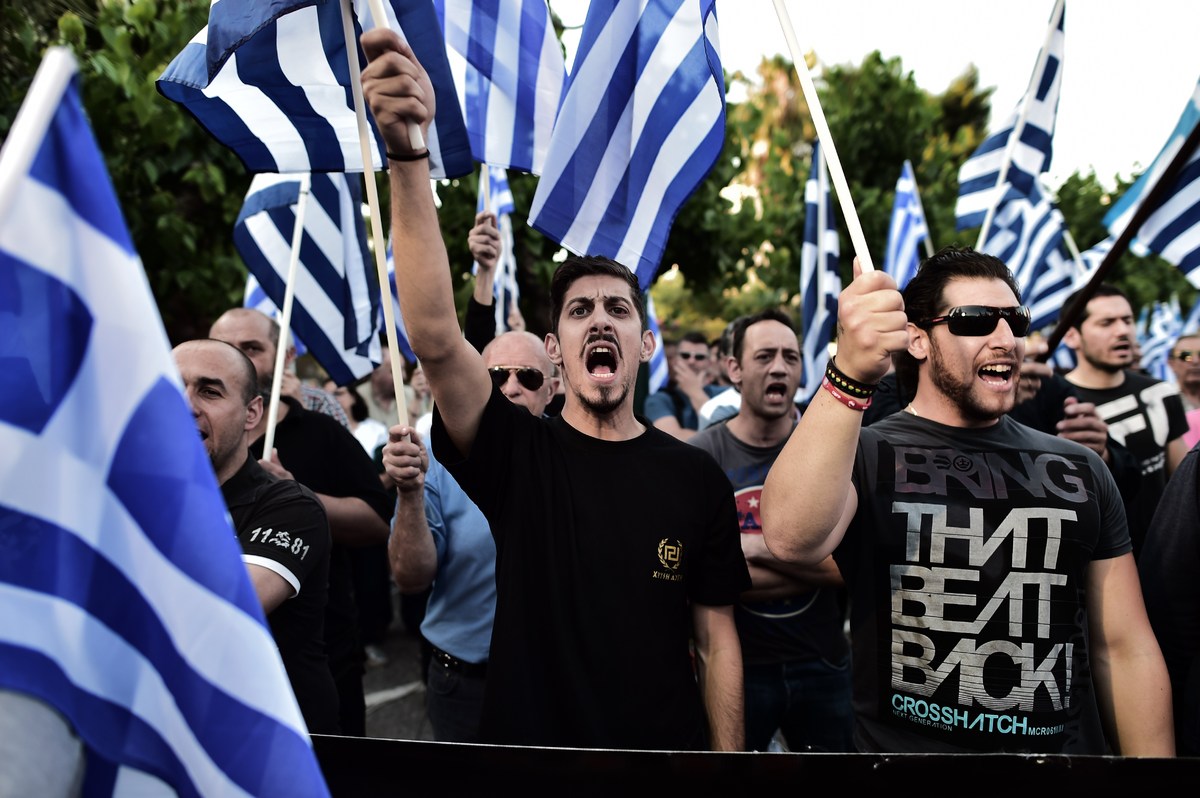
  Because elsewhere in Europe, things are changing. For the worse. In France, Marine Le Pen's anti-Jewish, anti-Muslim Front National won the elections, gaining 24 MEPs; in Hungary the openly neo-Nazi party Jobbik won approximately 15% of the vote - a comedown from their general election showing, but still enough to claim 3 seats; Greece's Golden Dawn, the leader of which has a Swastika tattoo and much of which's leadership is currently in prison for racially-motivated crimes, claimed another three - their first ever MEPs. All across Europe, the far-right has either advanced or held its ground, with the result that this European Parliament will contain more fascists and fascist sympathisers than it will Greens and Liberals combined.

  The rise of UKIP in the UK is infinitely preferable to the triumph of these kinds of people on the continent, but it is all symptomatic of the same fundamental disease - the poison of right-wing populism: engineered by the media, fuelled by economic devastation and politicians' inability to connect with their electorates and exploited by thugs, racists and ultra-nationalist fearmongers across Europe. We need a fundamental change in our political culture, not just in the UK but across the EU - and indeed, across the Western world - or this sorry tale will only get worse. 


Postscript
This does relate to the EU, I promise. As some of you know, the EU and the USA are currently trying to force through a deal which will allow US corporations to sue European governments in secret courts for regulating their operations and to forcibly buy out essential public services such as the NHS. Please help to stop them by signing this petition.

Thursday, 15 May 2014

Europe 2014 - Options on the Table

Part One - Why You Should Vote

  One week to go until the European Parliament elections. Are you excited yet? I trust we shall all be voting? No. Well, you should. As I explained in an earlier post, not voting ISN'T - as Russell Brand would have us believe - a protest. If there's no party you feel represents your views, I sympathise, but at least have the good grace to turn up and spoil your ballot paper. Because not voting at all means only one thing: the politicians get to ignore you. And that can't be good.

  Plus, the thing about the EU elections is that the vote is conducted under proportional representation, or PR - specifically by the Closed Party List system. Without getting too technical, this basically means that the constituencies for the election are huge and return multiple members - the South-East of England, for example, returns ten. Every vote counts, and the members are allocated by the percentage of the votes that were cast for that party (unlike in general elections, you vote for a party rather than an individual). 

  Continuing our example, in the South East in 2009 the results were as follows:

  • Conservative Party: 34.8% of the vote; 4 MEPs
  • UKIP: 18.8% of the vote; 2 MEPs
  • Liberal Democrats: 14.1% of the vote; 2 MEPs
  • Green Party: 11.6% of the vote; 1 MEP
  • Labour Party: 8.2% of the vote; 1 MEP
  • BNP: 4.4% of the vote; 0 MEPs
                     [SOURCE: BBC News]


  As you can see, PR a far more democratic way of allocating seats than the First-Past-the-Post system used in Local and General Elections. Under such a system, the Conservatives in the UK would have gotten all 10 South-East England MEPs. This would therefore waste all of the votes cast for the other parties, as well as all of the excess votes which the Tories had over their closest competitor, UKIP - 15.9%. Therefore, under FPtP, only 18.9% of the electorate's opinions would have been taken into consideration. PR isn't perfect - no representative system can be - but at least under this system the MEPs in the chamber far more closely match the wishes of the electorate.

  I digress somewhat. The point is, PR is far more democratic than any other system, so the old rallying cry of the apathetic voter - 'My vote won't make any difference' - no longer holds. The EU election is one election where every vote really DOES make a difference. The UKIP claim that 70% of our laws are made in Brussels may not be true, but in the region of 7% of primary and 14% of secondary legislation DOES originate from within the EU apparatus, and that is something not to be taken lightly.

  I'm no Eurosceptic, but is is true to say that the EU is fundamentally antidemocratic in its current form. We have the power to change that, and to forge a Europe that works for all of its people - but if we continue the current trend of only around one-third of the population voting, that will never happen.


Part Two - Who to Vote For?

  Right then. Now I've done the slightly ranty bit, it's about time I cast an eye on the bunch of toerags actually looking for your vote. Now, descriptions of each major party and their policies can be found here, but I will summarise each of their broad positions for you, with particular focus on Europe, of course. 

The Conservative Party
  • Currently the largest party in the coalition government, the Conservatives are ideologically committed to neoliberal economics. This essentially means they want reduced state spending, a deregulated capitalist market, a restricted welfare state and no state ownership of industry
  • Conservative social policy is, unsurprisingly, conservative - they support, in general, traditional institutions such as the monarchy and Christian values such as the nuclear family. They are also very authoritarian, favouring harsh anti-terror measures and the use of prisons
  • The Conservative view on the EU is mixed, with some members - such as Nicholas Soames, grandson of Winston Churchill - being strongly in favour of the EU, whilst a growing percentage are committed Eurosceptics
  • The party is committed to holding a renegotiation of the UK's settlement with the EU, followed by an in-out referendum on the basis of that renegotiated relationship to be held no later than the end of 2017. Prime Minister David Cameron has pledged to step down as PM if he is unable to deliver on this promise
The Labour Party
  • Currently the largest opposition party, Labour broadly support the same neoliberal economics as the Conservatives, although they favour slightly more regulation of the market and there have been some hints they may be willing to renationalise the rail industry
  • Labour social policy is less conservative than the Conservatives', but they are equally authoritarian and much of the anti-terror legislation currently in place was drafted under the last Labour government
  • The Labour Party is divided on the issue of the EU. Whilst there are few members as outwardly Eurosceptic as some Conservatives, there is a broad range of opinion within the party
  • The Labour leadership has refused to make any clear statement on the issue of the EU, though it is generally assumed they are pro-Europe. They are committed to a referendum if any further treaty to transfer powers to Brussels is proposed
The Liberal Democrats
  • The Lib Dems are the smaller partner in the coalition government. They are committed to neoliberalism, as the other main parties, although they have acted as a slight moderating influence on the extreme neoliberalisation of the Conservatives
  • Lib Dem social policy is relatively liberal and they are strong advocates of equal rights etc. However, they have signed up to the authoritarianism of the Coalition and have backed such Tory proposals as secret courts in which the defendant may not even know the charges against them
  • The Liberal Democrats are very pro-Europe and are committed to a referendum only if significant powers are to be given up by the UK. They wish to stay in the EU
The United Kingdom Independence Party
  • UKIP have no Westminster representation but are increasingly popular in the opinion polls. They are the most neoliberal of the main parties, advocating such things as a flat income tax rate and the scrapping of maternity leave
  • UKIP social policy is highly conservative and many candidates have expressed extremely distasteful views with regards to equality and democracy in the UK. They are generally less authoritarian than the above parties, however, though they wish to implement strict immigration controls to limit annual net migration
  • UKIP's position on the EU is very clear - they want the UK to withdraw immediately, without any referendum or renegotiation on the issue
The Green Party
  • The Greens have only one Westminster MP. They are the largest UK party not committed to neoliberal economics, and advocate extensive market re-regulation and the renationalisation of the rail and energy industries, amongst others, as well as a more comprehensive welfare state
  • Green social policy is extremely liberal, being outspoken proponents of equal rights for LGBT people etc. and they are committed anti-authoritarians
  • The Green policy on Europe is somewhat mixed - they want to remain part of the EU, but campaign for increased democracy within it and a shift in focus away from the interests of big businesses
The British National Party
  • The BNP are an openly racist, fascistic organisation. They advocate corporatism as an economic system and a very harsh social policy, as well as strict authoritarian controls and the immediate cessation of immigration - quite possibly along with the expulsion of existing migrants

  So, there we go - these are the six UK-wide parties currently in with a chance to win MEPs. I haven't covered the SNP, Plaid Cymru or the Northern Irish parties on the basis that if you live in Wales, Scotland or Northern Ireland you probably know a hell of a lot more about those organisations than I do, but in general the SNP, Plaid and the Irish republican parties are pro-EU while the unionist parties tend to be more Eurosceptic.

  Who to vote for, then? Well to me the choice seems quite simple. If you want out of the EU, vote Conservative - UKIP have no chance of achieving power in 2015, and never turn up to the EU Parliament so are useless as representatives, whereas at least the Tories are offering a realistic prospect of a referendum. If you want to stay in - and I hope you do - vote Green: they are highly active members of the EU Parliament who do their best to defend the interests of people over businesses and the political elites, and will campaign for reform to the issues which do admittedly plague the EU as is. 

  I can see no real reason to vote Labour - they have resolutely ignored the issue of Europe in all their election broadcasts and speeches, so frankly they don't deserve your consideration. The Liberal Democrats are slightly too comfortable with the anti-democratic features of the EU for my liking - plus, they're due some comeuppance for their treachery in joining the Tories in the first place - but they're not the worst choice you could make. I would reiterate, though, that both of these parties are signed up to the same neoliberal economic consensus that the Tories are, so if you're unhappy with the way the economy works for ordinary people, I urge you to consider the Greens.

  Detecting any hint of bias yet? Good - I should hope so.

  Oh, and don't vote BNP. Just don't.


Part Three - What Everyone Else Reckons

  Here, have some polling data before you go. You know you want to!


This graph shows the fluctuations which have been taking place over the most recent polls. Labour, the Tories and UKIP have converged - meanwhile, so have the Lib Dems and the Greens. Looks like it might be all to play for after all


The polynomial trendlines of the data smooth out the smaller changes to show the bigger picture. As we can see, despite a period in the lead UKIP look like they may well be on a downward trajectory. Meanwhile, the Tories are on the up and the Greens are catching the Lib Dems


These rolling averages are very crude, but they at least give some idea of what the election would look like were it held tomorrow. Given that there's only a week to go, time is running out for the parties to lay claim to their voters. At the moment, Labour and UKIP are neck-and-neck and the Tories (factoring in the three-point margin of error) aren't far behind. It's going to be close!
Monday, 28 April 2014

Europe 2014 - UKIP Rising

Source: UK Polling Report
  In my last post I commented at length about the increasing popularity of UKIP, with particular reference to the upcoming European Parliament Election. Well, UKIP have now overtaken Labour as no.1 party in the pre-election polls for the second time this year, as the graph above shows. The first thing to say about this is that it is by no means conclusive - Labour could quite easily swing back into first place again, and it would not be at all surprising if the two parties switched positions several times between now and the 22nd of May.

  That said, though, it doesn't spell fantastic news for the political mainstream. Taking a look at the wider trends, it would appear that the fluctuating-but-steadily-rising level of support for the far-right party have not been overly damaged by the latest spate of scandals. And they've been particularly bad this time around, including a UKIP candidate telling Lenny Henry to 'emigrate to a black country' and one of the handpicked stars of their first EU election broadcast, Andre Lampitt, launching a tirade of disgusting online abuse, of which perhaps the most shocking example was the claim that 'slavery was an act of war' and that 'you lost stop being so damn jealous and move forward'.

  The fact that BNP leader Nick Griffin defended these comments should really speak for itself.

  So, if Farage and his party can not only withstand negative publicity on this level but actually make political gains whilst it is going on, questions surely have to be asked about just what can stop them. The inexorable rise of the Eurosceptics across Europe poses perhaps the biggest threat to a united, strong and prosperous Europe - and UKIP are no exception. Indeed, their gloss of respectability which groups like Le Pen's Front National and the BNP themselves have been unable to acquire, despite considerable popular support, makes them perhaps the most dangerous threat to the EU of all.

  But perhaps it's not all doom and gloom. Another clear trend revealed by the graph is the improving fortunes of the Green Party. This is not entirely inexplicable - the Greens not only have a eurosceptic streak to them, albeit not nearly so pronounced as UKIP's, but they also represent the same anti-establishment sentiments the 'kippers do. In addition, and most critically, their policies actually make sense and don't include a flat rate of tax - a policy which would spell doom for the working poor and set the upper-middle classes and landed gentry rubbing their hands together with glee.

  To sum up: UKIP are on the rise, the 'big three' have taken a hit and the Greens - challenging the Lib Dems now for fourth place - are set to do better than ever. Something to think about, at any rate.


POSTSCRIPT
This is entirely unrelated but very interesting. No-one else seems to have picked up on this, but yesterday on the Andrew Marr show, this little exchange was heard:

     ANDREW MARR: 
          And you’re going to get Boris back in the House of Commons to lead you.  
     JEREMY HUNT: 
          Well that would be wonderful

Freudian slip, perhaps? Time will tell... Meanwhile, Cameron had better watch out...
google-site-verification: google3c44c0a34dc56f57.html