Atheism and religious extremism are both on the rise - it's time we talked about it
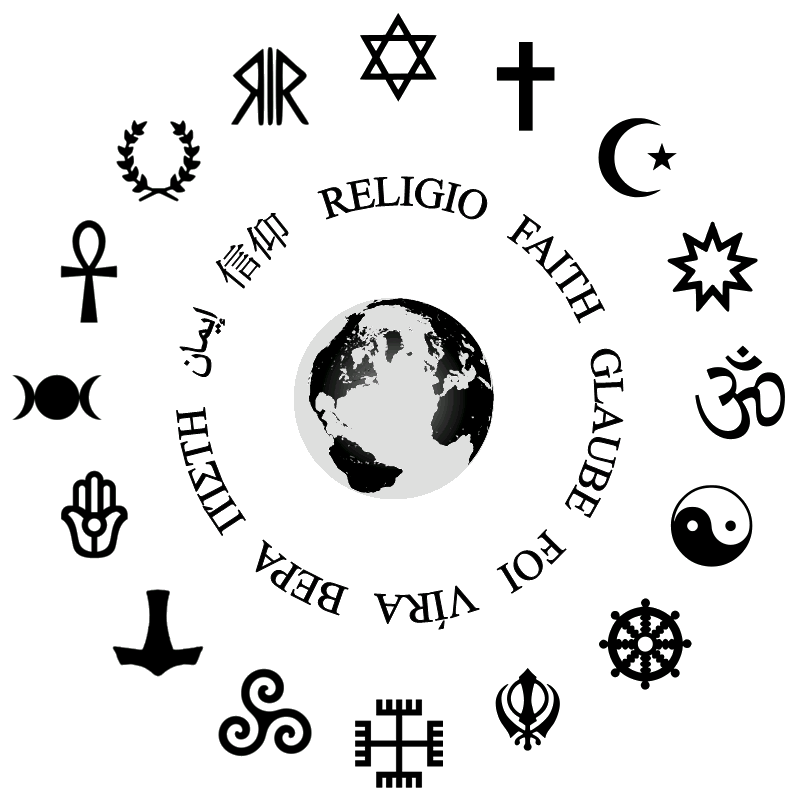 To be an atheist in the United Kingdom today is a thankfully easy thing. The 2011 census states that a more than a quarter of the population officially have no religion, and a poll this April revealed that only a third of Britons believe religion has a positive role to play in the country, while over a quarter believe it has an actively negative effect. However, religious extremism is also on the increase - the exodus of British Muslims to fight for IS in Iraq and Syria and the rising social media popularity of Protestant extremist groups like Britain First prove that.
In a Britain where both extremes of attitude to faith - total disbelief and total belief - are becoming more common, it is important to talk about this, even if it does provoke discomfort to do so. The champions of what is often (mis)termed 'militant atheism' - people like Richard Dawkins, Sam Harris and the late Christopher Hitchens - have reached the point now where they are alienating as many people as they convert. It is perhaps time then for a less charged discussion. Here goes...
What's in a Name?
To start with, let's define some terms. We'll kick off with the aforementioned 'militant atheist' - a nonsense term if there ever was one. A militant is someone who takes up arms in the name of a cause; very few people have ever taken up arms in the name of not believing in a god - why would you? (And no, Stalin doesn't count. Don't go there.)
Atheist means simply someone who does not believe in any gods. To be clear, it does not mean they believe there definitely aren't any - just that, on balance, they think there is insufficient reason to believe there are. What people mean when they say 'militant atheist' is usually antitheist - i.e. someone who is opposed to religious belief. It is entirely possible to be an atheist without being an antitheist.
Theist, as you probably guessed, is someone who believes in at least one god - they may believe in many more. The word for this is polytheist, whereas someone who believes in a single deity is a monotheist. Some faiths have a concept of multiple aspects of a single deity having semi-independent existence of their own - e.g. Hinduism and most denominations of Christianity - which is known as pluriform monotheism.
Agnostic is a more ambiguous term - technically it describes anyone not 100% certain that god(s) either exist or that they don't, which includes most atheists and most theists. More usually, however, it is used to describe someone who is halfway between the two - i.e. someone who considers the probability of the existence of god(s) to be as likely as it is not. These people are pretty rare, in my experience.
Who's Who?
The three most important faiths within the UK, according to the 2011 census, are Christianity (59.5%), Islam (4.4%) and Hinduism (1.9%), with 25.7% of the population having no religion. Within Christianity, the most important denominations are Anglicanism (62%), Roman Catholicism (13.5%), Presbyterianism (6%) and Methodism (3.4%).
The British Social Attitudes Survey suggests a somewhat different picture, however. The 2013 edition put Christianity on 41.6%, Islam on 4.6% and Hinduism on 1.5%, with a majority (50.6%) stating they had no religion. There are numerous possible causes for this discrepancy - more up-to-date data, a smaller sample size, the elimination of the problem of parents putting their own faith as their children's on census forms etc. (it should be noted, however, that the margin of error in the Survey was only 1.72%).
What I reckon...
I am, and have been more or less since the age of fifteen, an atheist. This does not mean, as noted above, I am certain no gods exist - what it means is that I have never seen any particularly compelling evidence to prove that any do. The claim that one or more supernatural entities exist, hidden from our sight, and control many aspects of the world and human life seems to me to be quite an incredible one. It requires, therefore, some fairly incredible evidence - evidence which is not apparent to me.
Though I was raised a Christian (of somewhat hazy denomination - mostly Anglican with a bit of Methodist thrown in for good measure) I was never a particularly devout one, and - following a brief period of heightened religious awareness in my early teens - more or less slowly lost my faith over the course of a couple of years. It simply seemed to me that the only reason I believed in God was that I had been told he existed, without any independent corroboration of the fact. Whilst I am open to any evidence any theist might care to proffer, so far I have seen nothing even remotely convincing.
Following the loss of my faith I became fairly antitheistic for a brief period. I would now consider myself somewhat less so, but I do believe the existence of religion causes a few problems. My opposition is not really to the kind of personal spiritual belief which characterises many ancient polytheistic religions and the so-called New Age beliefs of the twentieth century. Whilst some of these ideas do strain my credulity - frequently well past breaking point - they do little real harm. No, my main concern is organised religion.
The Dangers of Organised Religion
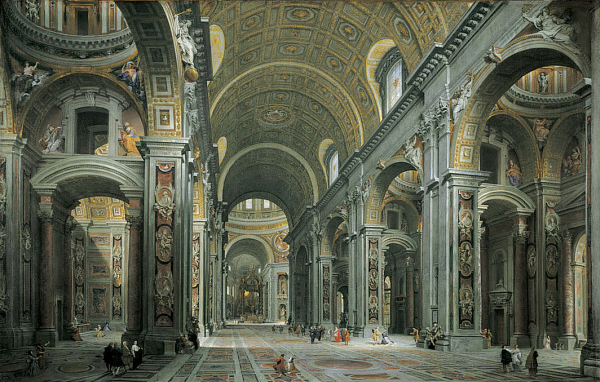
I would define organised religion as one which has a hierarchy within it - where certain people are placed above others in the religious pecking order. They also tend to have what you could consider the 'traditional' trappings of religion - holy books, places of worship, formal prayers and rituals. The Roman Catholic Church and the Church of England are the two clearest examples of this kind of set-up, but it also includes most other Christian denominations, as well as most Judaic, Islamic, Sikh, Buddhist denominations, and many others besides.
The issue with these kinds of hierarchical religions is they impress upon their members the idea of obedience - blind obedience, without question. The problem is especially marked when children are introduced to such organisations - the human impulse to listen to and take heed of the advice of our elders, essential for survival in early humans, allows indoctrination and exploitation of young people. Vulnerable adults, such as those with severe learning difficulties or mental illnesses, are also easy targets for these hierarchies. The upper echelons of such religious groups - Archbishops, Cardinals, Ayatollahs and the like - are able to exert massive influence over vast swathes of people.
This is a form of social control. Throughout history, the unelected leaders of religious organisations have wielded enormous power over the populations they ostensibly serve. They have also frequently collaborated with governments to the detriment of the people - the complicity of the Catholic Church in the atrocities of the fascist regimes in Italy and Spain in the twentieth century (though less so in Germany) being perhaps the most dramatic example of this. Ultimately, the fact that anyone wields such power without being democratically elected is concerning.
Blind Faith
This leads me to another (linked) problem with the more dogmatic religions - the accepting of doctrine on blind faith alone. This occurs in most religions, to varying degrees, but it is particularly pronounced in Wahhabi Islam, Orthodox Judaism and Christian denominations such as Mormonism (and in other Christian Churches before the secularisation of the late 20th Century). There is a fine line between these extremely dogmatic faiths and dangerous cults and extremist groups. It is no coincidence that IS, for example, are followers of a particularly extreme form of Wahhabi.
 The practice of accepting doctrine on the basis of faith - i.e. without independent evidence - is inherently worrisome. It begets a mindset which is easily corruptible - even if the faith itself is benign. Stalin, for example (see, he does come in somewhere) received training as an Orthodox priest; since the population of the Soviet Union was predominantly Orthodox Christian before the Revolution, he and the other Soviet leaders were able to exploit this to inculcate a culture of blind obedience to the Stalinist version of Communism. Indeed, he revived the Church in 1942 in order to assist in the war effort.
 Unquestioning obedience to authority and acceptance of doctrine without supporting fact is how demagogues build up support for their ideologies without challenge, and it is a mindset which is fostered by the dogmatism of many religious groups. Sceptiscism is the sign of a healthy, enquiring mind - nothing should be taken on faith alone.
Conclusions
I hope I have outlined clearly my own beliefs and just two of the principal issues I see with organised religion in the 21st century. This is not to say there are not others, and it is certainly not to say that religion does not have its positives. Talking about faith, why one is or is not religious, and what the issues are which one sees in people of differing beliefs to oneself is still something of a taboo in British society today - but it shouldn't be. Only by having a frank, honest and open dialogue can we resolve these issues and challenge the extremist positions taken by some individuals. Faith - or lack thereof - is a protected characteristic under UK anti-discrimination laws, but that shouldn't mean we can't talk about it and criticise it if need be.
if we don't, after all, we've seen what the consequences can be.

